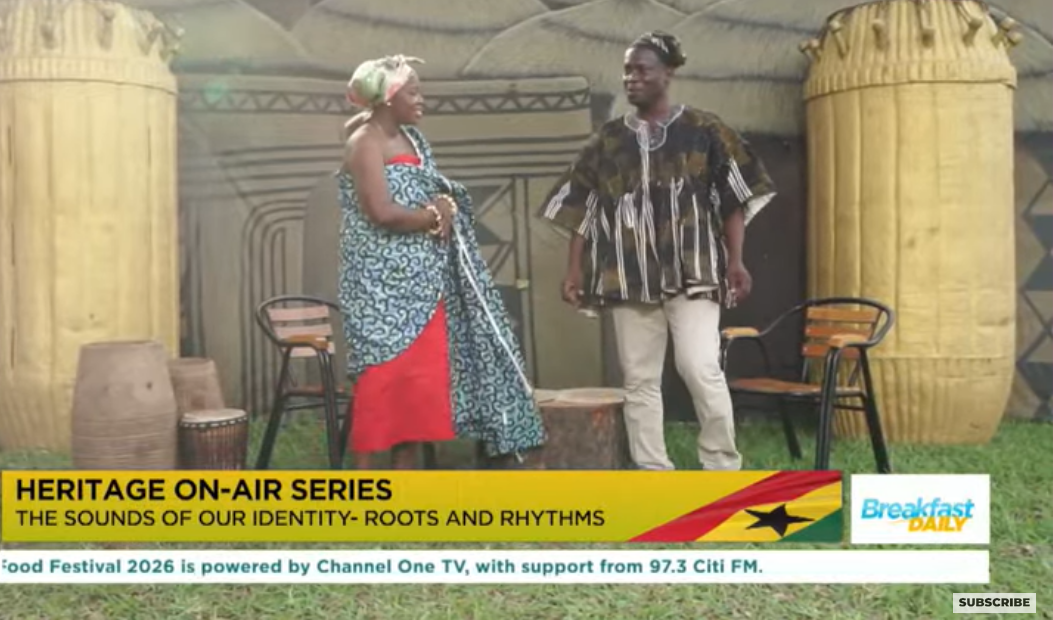
Every March, as Channel One TV and Citi FM mark Heritage Month, attention turns not only to colourful festivals and traditional attire but also to the sophisticated systems of communication embedded in Ghanaian culture.
Long before colonial contact and the spread of Western literacy, societies across Ghana had developed intricate ways of encoding messages in movement, rhythm and sound.
Drums were not merely musical instruments but “talking” devices capable of transmitting proverbs, praise poetry and even political directives across distances.
Similarly, dance forms among the Ewe, Ga and other ethnic groups carried layered meanings — signalling status, emotion, resistance and communal identity.
The Head of Events and Partnerships at Channel One TV and Citi FM, Frema Adunyame, hosted Dr Benjamin Amakye-Boateng, Head of the Music Department at the University of Ghana, to explore the theme, “The Sound of Our Identity.”
“Every tribe in Ghana has something that identifies them as a people in terms of dance and music. Even when you look at all the 16 regions, they all have something that identifies them,” he said.
He cited Ga musical traditions such as kpalongo, kolomashie and agbey. “Agbey is one of the lesser-known musical types from the Gas. It sounds a bit like Yoruba music, and anytime they perform it, they call all the prominent women to come out to dance. Men do not dance to this. They sing about social issues,” he explained.
In the Volta Region, he mentioned borborbor, agbadza and atsiagbekor. “All these dances speak to the history of the people. Atsiagbekor, for example, talks about war. The Ewes have a history shaped by conflict, including their migration from Notsie in present-day Togo. The drum patterns they play contain messages only indigenes understand. They used them to communicate among themselves so that enemies would not understand,” he noted.
Among the Akan, he referenced adowa and kete as royal dances, as well as sekyere, which is associated with courtship. “When a man wants to woo a woman, they play that to express what they want to say. Those watching may see only entertainment, but the performers understand the message they are conveying,” he said.
He added that northern Ghana is equally rich in symbolic performance traditions. “You have dances like Damba, takai and bamaya. In Bolgatanga, there is the pony dance performed by women. Through these dances, music and drums, communities communicate among themselves in ways that go beyond mere performance,” he stated.
Watch the full interview below.