The Ministry of Gender, Children, and Social Protection is working towards amending Ghana’s legal framework to address disparities between the age of consent to sex and the legal age of marriage.
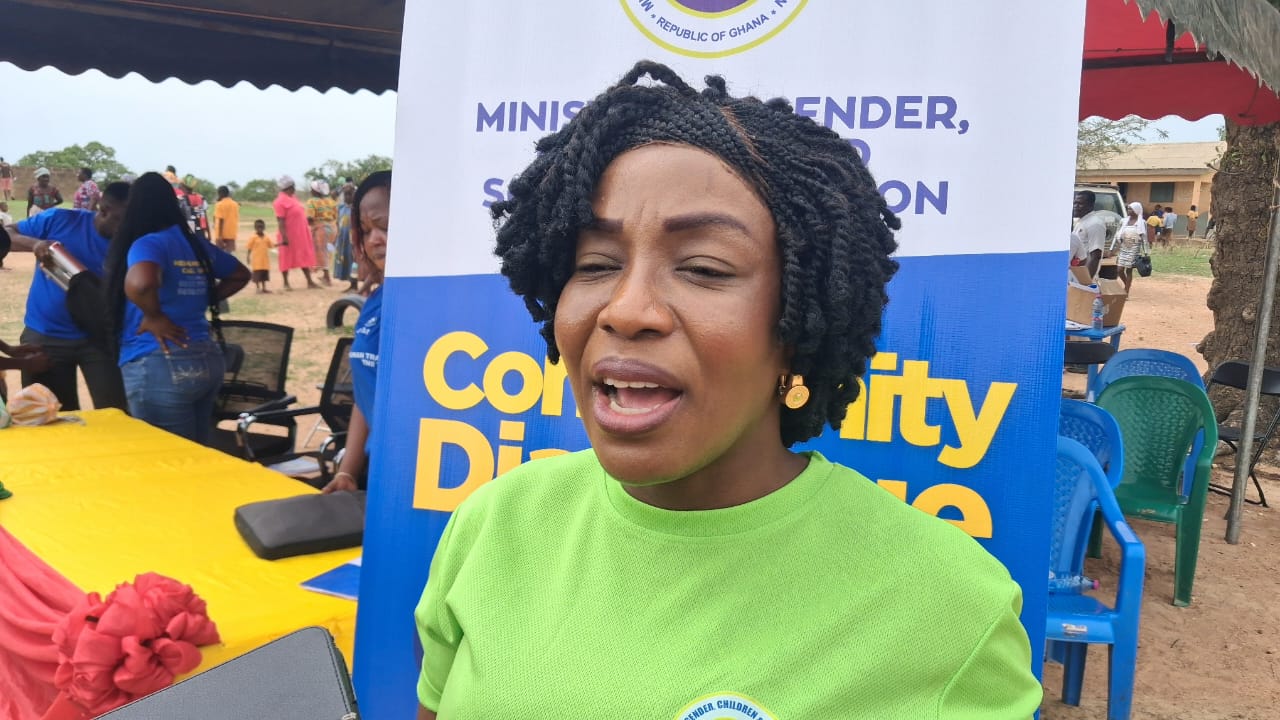
Francisca Atuluk, Director for Social Protection at the Ministry, made this disclosure in an interview with the Ghana News Agency on the sidelines of a community dialogue on social protection and other social issues, organised by the Ministry and held in Dachio, a suburb of the Bolgatanga East District.
Currently, the Ghana Children’s Act of 1998, Act 560, stipulates that one can only marry from the age of 18 years, while the Ghana Criminal Code of 1960 specifies that the legal age for one to consent to sex is 16 years.
This disparity between the age of consent to sex and marriage has, over the years, raised concerns, with some stakeholders suggesting that the legal inconsistency was a major cause of many abuses against children, especially girls, leading to high teenage pregnancy rates among many girls.
As a result, there have been advocacy efforts and calls for the two legal frameworks to be reconciled to help address the legal vacuum that some people exploit to abuse young girls.
Hence, the Ministry, led by its Sector Minister, Dr Agnes Naa Momo Lartey, has constituted a team to review the legal inconsistencies and other legal challenges facing the development of children and recommend reforms through the ongoing amendments to the Children’s Act.
Atuluk said the Ministry recognised concerns over the current legal provisions, which set the age of consent to sex at 16 years while the legal age of marriage remains 18 years, adding that the situation posed challenges to efforts aimed at protecting adolescents and reducing teenage pregnancies.
“There have been a lot of calls and advocacy for these two ages to be reconciled. We are working on an amendment.
“The Honourable Minister has tasked a team, which I’m part of, to look at how we can justify these two ages. We know the problem with the law, but if the law doesn’t align with what we are doing, then we cannot move forward,” she said.
She said the Ministry intended to facilitate a broad public dialogue on the issue to gather views from stakeholders and build consensus on possible reforms.
“The Ministry is very much aware, and the Honourable Minister is leading that charge to let us have a public dialogue to see what we can do,” she said.
Atuluk expressed optimism that the ongoing amendment of the Children’s Act would provide an opportunity to address the concerns and strengthen legal protections for children and adolescents.
The Director reiterated the Ministry’s commitment to reducing teenage pregnancies and other challenges facing children through education, social protection interventions, and community sensitisation programmes.
She said the government was committed to social protection issues, adding that initiatives such as the School Feeding Programme, the Capitation Grant, Free Senior High School education, and the distribution of free sanitary pads were aimed at keeping girls in school and enabling them to focus on their education.
As part of activities marking the community dialogue, the Ministry registered residents onto the National Health Insurance Scheme (NHIS) free of charge to improve vulnerable people’s access to quality healthcare regardless of their financial circumstances.
The dialogue brought together government officials, traditional authorities, community members, development partners, and civil society organisations to discuss social protection interventions and other social issues affecting communities in the district, including domestic violence, child marriage, teenage pregnancy, human trafficking, and illicit drug abuse, among others.
Source: GNA