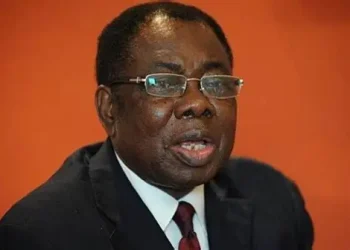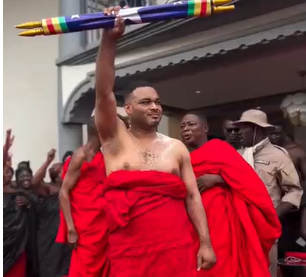
Lawyer for the Kristo Asafo Mission, Nana Kofi Safo Kantanka, has clarified that the gathering that preceded the violent disturbances was intended solely to introduce Israel Kwadwo Safo Akofena as the chosen successor to the late Apostle Kwadwo Safo and not to formally install or inaugurate him as leader.
He indicated that the formal installation of the successor was expected to take place only after the funeral of the late Apostle Kwadwo Safo and upon reaching a consensus among family members and stakeholders on who should succeed him as leader of the Kristo Asafo Mission.
His comments come in the wake of tensions within the Kristo Asafo family over the succession process, which culminated in a chaotic scene that reportedly left former Member of Parliament for Dome-Kwabenya, Sarah Adwoa Safo, with a gunshot wound.
Speaking on Eyewitness News on Monday, June 22, Nana Kofi Safo Kantanka explained that the event process was guided by the church’s constitution, which outlines the procedures to be followed after the death of the founder.
According to him, the constitution mandates that the Chairman of the Council of Elders temporarily assumes the administrative responsibilities of the founder in an acting capacity for three months. During that period, the Council of Elders is required to initiate the process of selecting a substantive successor.
He noted that the process began shortly after the death of Apostle Kwadwo Safo, with consultations and assessments involving all eligible candidates. Under the church’s constitution, the pool of potential successors is limited to the male children of the founder.
The lawyer disclosed that the three eligible sons of the late Apostle participated in the selection process, which he said was fully documented and conducted by the Council of Elders. Following the consultations, the council settled on Israel Kwadwo Safo Akofena as its preferred choice.
He further stated that throughout the process, the Council of Elders engaged both the male and female children of the founder, seeking their views before arriving at a decision. According to him, no objections were raised during the consultations.
“The purpose of the gathering was simply to introduce Akofena. It was not an inauguration, installation or coronation. The formal processes were expected to take place after the funeral rites of the late founder, that is what we were told by the council,” he explained.
His clarification comes amid growing disagreement over the succession process. Earlier, the family of the late Apostle Kwadwo Safo issued a statement urging the public to disregard what it described as the purported assumption of leadership of the Kristo Asafo Church by Israel Kwadwo Safo Akofena.
The family maintains that it does not recognize any installation of a new leader, arguing that such a move would be inconsistent with the directives of the late founder and the provisions of the church’s constitution as amended in 2024.