New Patriotic Party (NPP) National Chairman hopeful Paul Afoko has called for the construction of an international airport in the Upper East Region, arguing that the infrastructure is critical to unlocking the region’s export potential and accelerating economic growth.
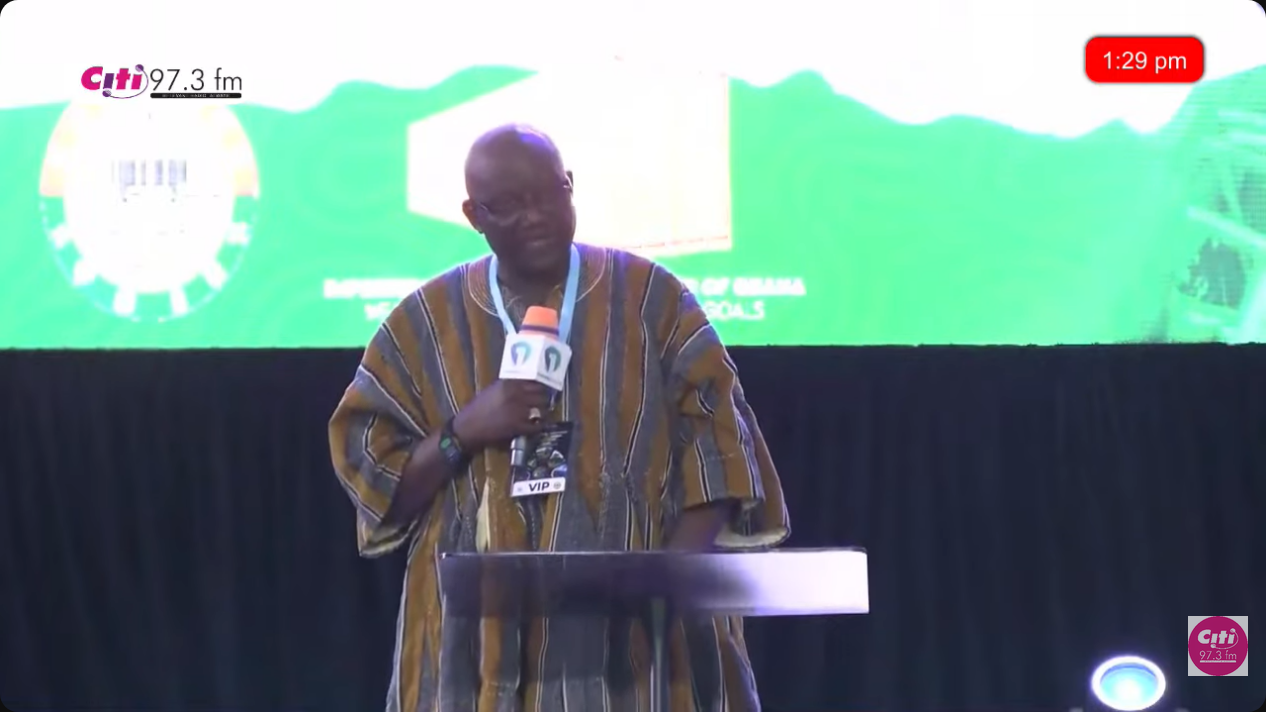
Speaking at the launch of the 10-Year PEARL Blueprint, a roadmap for economic transformation, job creation, infrastructure, agriculture and industrial growth in the Upper East Region on Monday, June 29, 2026, Mr Afoko said the region was well-positioned to become a major exporter of agricultural produce but lacked the logistics needed to access international markets.
“At this stage, I would say we need an airport urgently,” he said.
He argued that an international airport would enable producers in the Upper East Region to export fresh vegetables, fruits and flowers to Europe and other global markets while reducing transit times.
“We can export to the rest of the world. Flowers from Upper East will reach Europe before Kenyan flowers do,” he said. “Looking at how to produce strawberries, we can do the same.”
Mr Afoko said the region’s development should not depend solely on extractive industries, noting that investments in irrigation schemes such as the Tono project could support year-round agricultural production for export.
“The challenge is not finding buyers for these things. The challenge is in producing at sufficient scale throughout the year,” he said.
He added that local industries, including shea butter processing, basket weaving and textiles, also stood to benefit from improved export infrastructure.
“A single order from a major global retailer can exceed all our current production,” he said. “We must therefore organise ourselves to produce, standardise, invest in warehousing, cold chain facilities, packaging, and value addition, so that we become dependable year-round suppliers.”
Mr Afoko said an international airport would serve not only passenger traffic but also position the Upper East Region to tap into growing international markets for high-value agricultural exports.
He cited Kenya’s flower export industry as an example of how efficient air transport infrastructure could drive export-led growth, arguing that Ghana’s geographical proximity to Europe gives it a competitive advantage.
“We need the airport… to enable us not just to bring passengers, but to enable us to seize the opportunity of all those markets,” he said.
Mr Afoko also called for stronger cross-border trade and the establishment of logistics hubs to leverage the region’s strategic location and strengthen commerce with neighbouring countries.