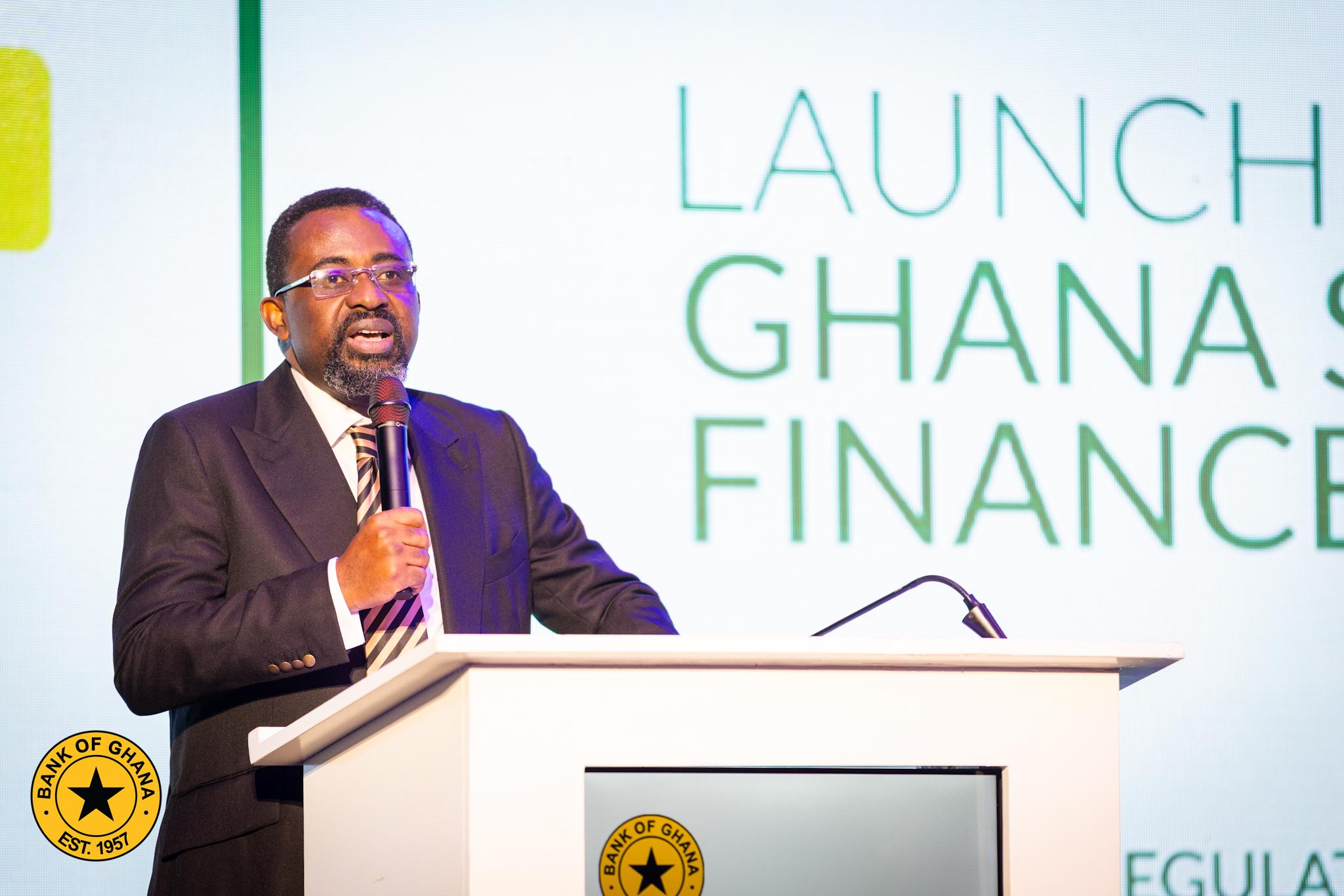
Governor of the Bank of Ghana, Dr. Johnson Pandit Asiama, is advocating stronger coordination among the country’s financial regulators, arguing that sustainability and climate-related risks can no longer be managed through fragmented oversight across the banking, insurance, pensions and capital markets sectors.
Speaking at the launch of the Ghana Sustainable Finance Roadmap in Accra on June 30, 2026, Dr. Asiama said Ghana’s financial stability architecture is built on distinct regulatory mandates, but emerging risks increasingly transcend institutional boundaries and require a unified response.
He noted that while banking, insurance, securities and pensions regulators each oversee separate segments of the financial system, their effectiveness ultimately depends on collaboration and a shared commitment to safeguarding long-term stability.
“Together, these pillars form an interconnected system whose strength depends on coordination, collaboration and a shared sense of responsibility,” he said.
The Governor stressed that sustainability-related risks, particularly those linked to climate change, move across institutions and markets, making isolated regulatory action inadequate.
“The risk that moves across the whole system cannot be managed by any one institution sitting alone,” he stated.
Dr. Asiama said building a sustainable financial ecosystem demands a shift away from siloed supervision towards coordinated, long-term engagement among regulators with aligned priorities and implementation strategies.
“Achieving a truly sustainable financial ecosystem goes beyond individual mandates. It calls for coordinated, long-term collaboration among all relevant regulators aligned around a shared goal,” he said.
The Ghana Sustainable Finance Roadmap seeks to provide that common framework, bringing together the Bank of Ghana, the Securities and Exchange Commission, the National Insurance Commission and the National Pensions Regulatory Authority to harmonise environmental, social and governance (ESG) standards and supervisory approaches across the sector.
According to the Governor, the initiative is intended to deepen regulatory coherence at a time when sustainability risks are becoming increasingly interconnected across financial institutions and markets.
He explained that the roadmap will not only guide ESG integration but also promote shared objectives, aligned supervisory tools and consistent implementation mechanisms among regulators.
The framework builds on nearly a decade of policy reforms, including the introduction of Ghana’s Sustainable Banking Principles in 2019 and the issuance of climate-related financial risk guidelines in 2024.
Dr. Asiama said those initiatives have improved industry preparedness, but argued that a more integrated approach is now necessary to consolidate gains and ensure uniform application across all segments of the financial sector.
The roadmap is expected to serve as a blueprint for regulatory cooperation on ESG integration, climate-risk oversight and sustainable finance development, with support from development partners including the International Finance Corporation (IFC).
He urged stakeholders to deepen partnerships, align strategies and maintain consistency in implementation to fully embed sustainable finance principles across Ghana’s financial landscape.