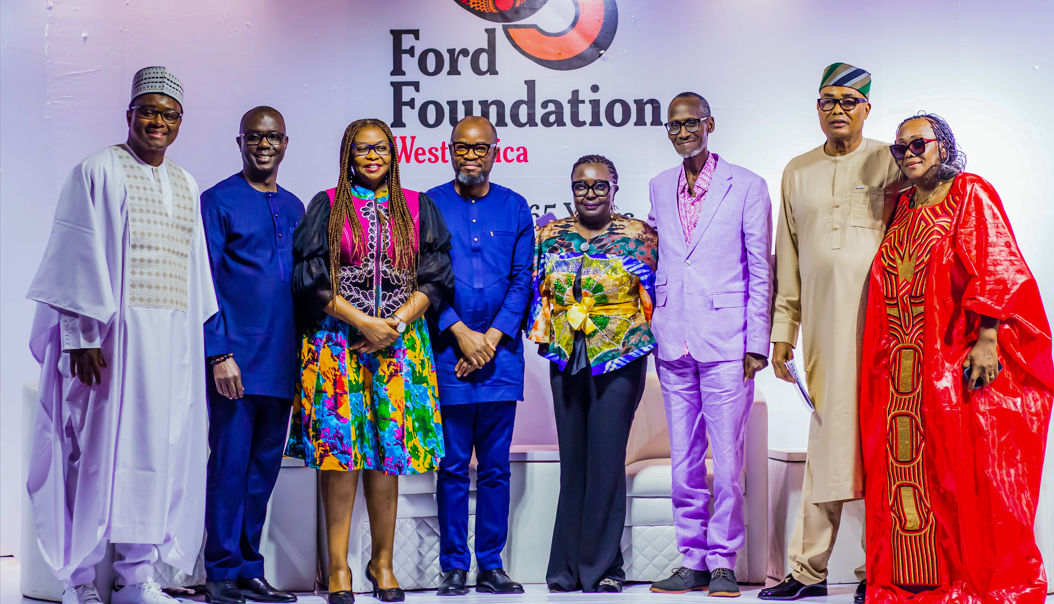
Ford Foundation Office of West Africa (FFOWA) has celebrated its six-and-a-half-decade journey of advancing social justice, equality, and inclusive development across West Africa.
During the celebration in Abuja, Dr. ChiChi Aniagolu-Okoye, Ford Foundation’s Regional Director for West Africa, described the anniversary as “a profound moment of gratitude and recommitment.”
The event brought together grantees, governments, partners, alumni, and friends of the Foundation to honour a shared legacy of courage, collaboration, and commitment to advancing human dignity across West Africa.
“This milestone belongs not to one institution, but to a shared community of changemakers across West Africa and beyond. Since 1960, our mission has remained clear: to stand with those building just and inclusive societies. Our legacy is not defined by numbers alone, but by the spirit of trust, courage, and partnership that has underpinned every grant and collaboration,” she stated.
Since opening its first regional office in Lagos in 1960, the Foundation has invested more than half a billion dollars in 1,098 partners across the region, particularly in Nigeria, Ghana and Senegal, to support critical areas including education, human rights, women’s empowerment, cultural expression, governance, and environmental justice.
“Long before ‘trust-based philanthropy’ became a global term, Ford was already practising it, supporting bold ideas before they became popular and strengthening institutions for sustainable change,” she added.
Martín Abregu, Senior Vice President of the Ford Foundation, emphasised that West Africa remains central to the Foundation’s global mission to reduce inequality and advance social justice.
“The Ford Foundation began as an American philanthropic institution, but today it is a global organisation rooted in local realities,” Abregu stated. “Our offices from Lagos to Johannesburg, New Delhi to Mexico City, serve as bridges between the local and the global. What happens in the Niger Delta, Ghana’s universities, or the streets of Dakar informs how the world understands social justice,” he added.
Delivering the keynote by His Excellency, Professor Yemi Osinbajo, SAN, GCON, Former Vice President of the Federal Republic of Nigeria, commended the Ford Foundation’s decades-long contribution to development across the West Africa, describing its approach as “a model of partnership rooted in humility, courage, and a steadfast belief in the potential of West Africans to drive their own progress.”
Reinforcing the Foundation’s central message of equity and inclusion, Professor Osinbajo urged African leaders to place justice at the core of development efforts.
“Social justice places the human being—not statistics—at the center of development. It produces development that reaches the majority,” he said.
In a message read on her behalf by Tolu Onafowokan, Director, Strategic Communications at the Ford Foundation, Heather Gerken, the newly appointed President of the Ford Foundation, reaffirmed her commitment to continuing the Foundation’s legacy of partnership and trust-based philanthropy.
“Our task is to build on the gains already made—to deepen accountability, strengthen democratic institutions, expand opportunity, and protect the most vulnerable. The Foundation will continue to listen first, respect local expertise, and support the bold ideas that emerge from communities themselves,” she said.
She extended her heartfelt congratulations to the Government and people of Nigeria on 65 years of independence and to the team of the Ford Foundation’s Office of West Africa on the occasion of their 65th anniversary, emphasising that both milestones “affirm a shared commitment to justice, democracy, and enduring partnership.”
As part of the commemoration, FFOWA launched a legacy publication and documentary film chronicling the stories, faces, and milestones that have defined the Foundation’s contribution to West Africa’s development and social transformation over 65 years.