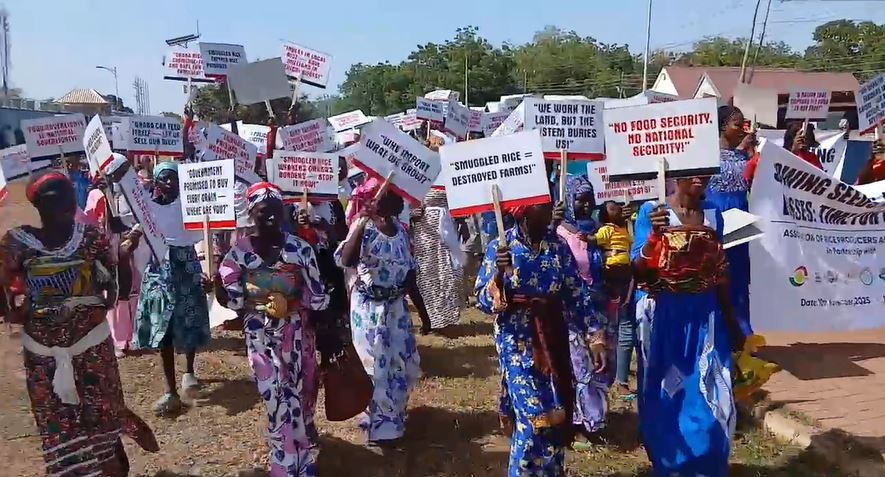
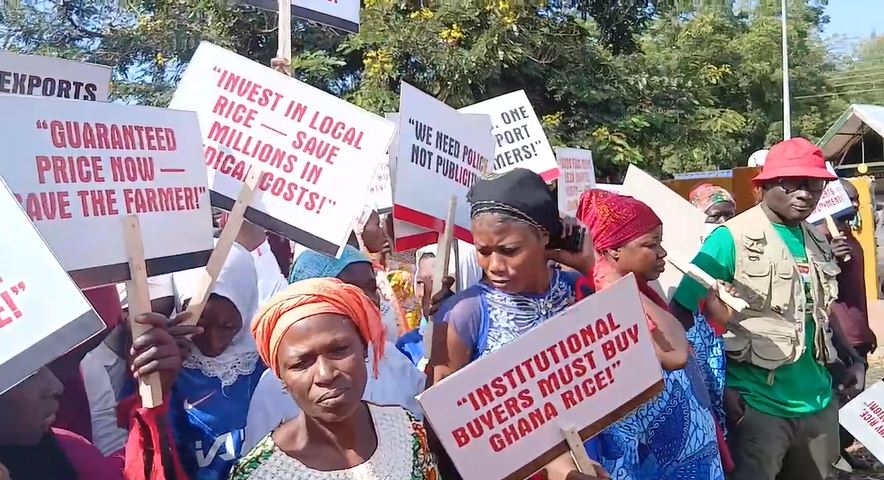
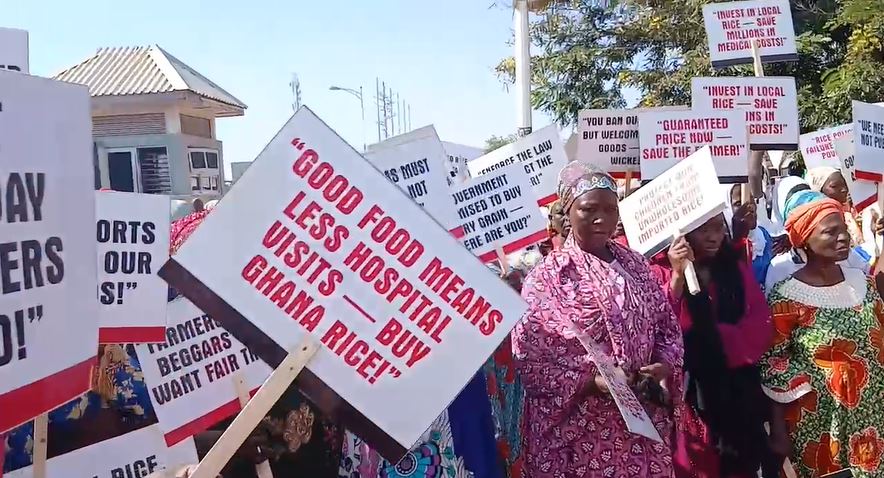
Grain farmers from across Northern Ghana converged in Tamale on Monday, November 10, to protest the growing lack of market for locally produced crops.
The situation has left hundreds of metric tonnes of rice, soya beans, and maize from last year’s harvest unsold in warehouses and factories due to limited market access for homegrown grains.
Speaking to the media at the protest, Alhaji Saibu Braimah, National Chairman of the Rice Farmers Association, expressed frustration over the government’s inaction, noting that the challenges had compelled farmers to boycott this year’s Farmers’ Day celebrations.
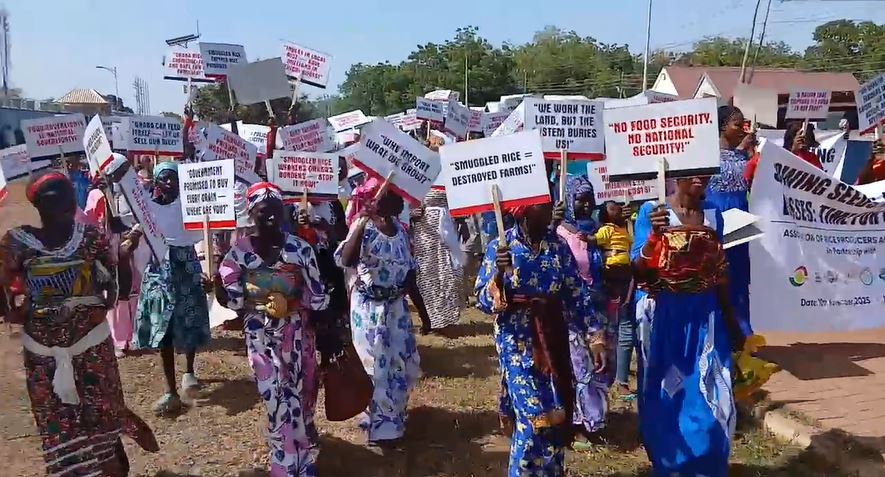 “We are having an issue concerning the market for our rice, and it started early this year. Looking at the 2024 harvesting season, we had a lot of rice parked in warehouses without anyone to market it,” he said.
Alhaji Braimah lamented that multiple appeals to the Ministry of Food and Agriculture to address the influx of substandard imported rice from neighbouring countries had yielded no results.
He dismissed the government’s short-term proposal to purchase the grains in bulk, describing it as unsustainable, and instead called for long-term interventions that would ensure a stable market and fair pricing for local farmers.
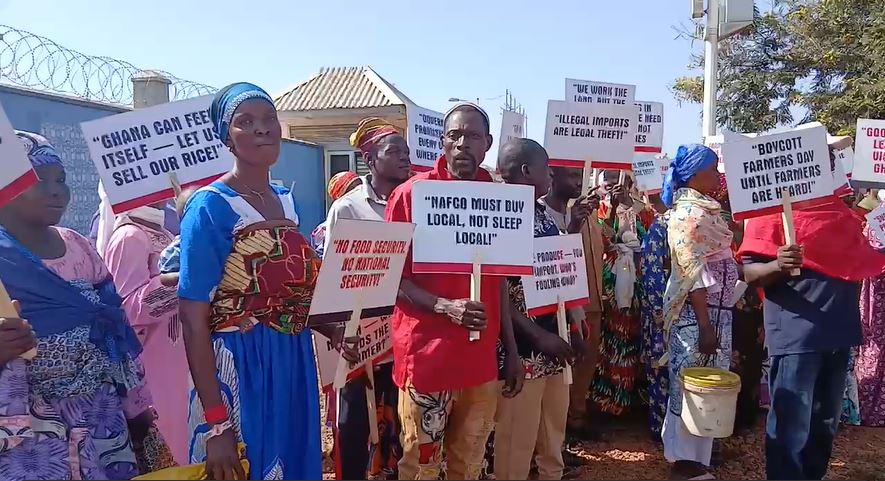 Joining the protest, a maize farmer from the Upper West Region, Alhaji Jibril Nankpa, urged the government to halt the importation of maize, arguing that it was crippling local production.
“Last year’s maize is still in the warehouse because we were unable to sell it due to imports. There was no drought this year, so maize is in abundance. The government should stop importing maize. If nothing is done, we are going to take action,” he warned.
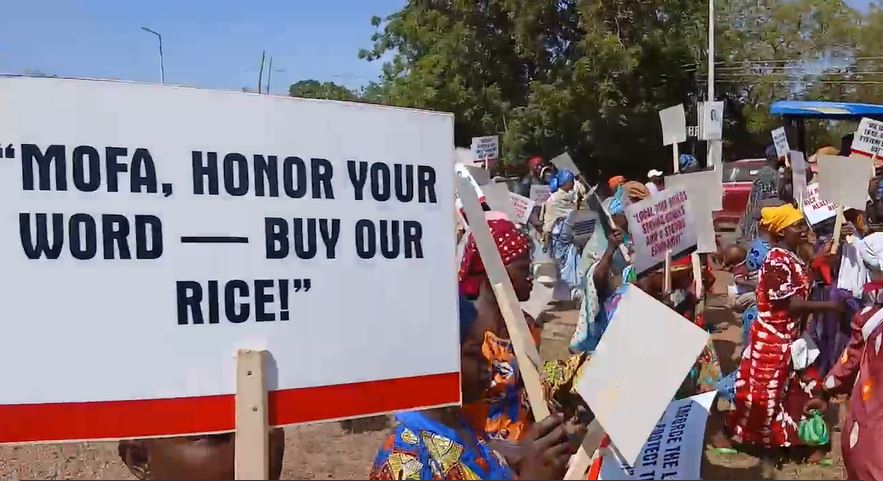 The farmers cautioned that unless urgent measures are taken to protect local produce, many may be forced to abandon agriculture and turn to alternative, potentially illegal, means of livelihood.
Meanwhile, President John Dramani Mahama has directed the National Buffer Stock Company (NAFCO) to purchase surplus farm produce from farmers across the country, following growing concerns over unsold crops and falling market prices.