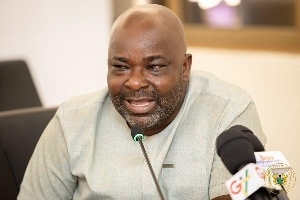
Michael Okyere Baafi, a former Deputy Minister of Trade and Industry, has dismissed allegations of corruption linked to the One District One Factory (1D1F) programme, questioning the credibility and timing of an audit said to have uncovered financial irregularities.
Speaking to journalists in Koforidua, Okyere Baafi argued that the claims were misleading and lacked transparency, insisting that the details of the audit report had not been made public, calling on the government to release the full document for scrutiny.
The former deputy minister, who also serves as the Ranking Member on Parliament’s Trade and Industry Committee and Member of Parliament for New Juaben South on the ticket of the New Patriotic Party, maintained that the structure of the 1D1F programme did not allow for the misuse of funds as alleged.
According to him, the government’s role under the initiative was limited to subsidising 50% of interest on loans provided by commercial banks to participating companies. However, he said no loans were eventually disbursed to the companies, meaning there was no interest payment for the government to subsidise.
“There was no loan advanced, so there was no interest to pay,” he said, adding that suggestions that public funds had been misapplied were inaccurate.
Mr Okyere Baafi further criticised the audit process, arguing that the lack of access to the report undermined its credibility. “The auditors didn’t do well… there’s no report; we don’t have access to it,” he stated.
He also accused the government of attempting to create the impression that the previous administration had mismanaged public funds. “We should not create the impression that the old government mismanaged funds,” he said.
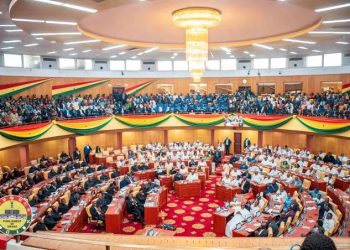
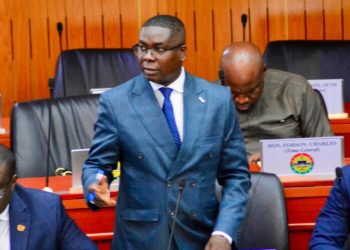
The comments come in response to disclosures made by the Ministry of Finance during a statement delivered in Parliament on Tuesday, March 10, on behalf of Finance Minister Cassiel Ato Baah Forson by Deputy Finance Minister Thomas Ampem Nyarko.
According to the ministry, a total of GH¢68.7 billion in public claims had been submitted for audit. Out of this amount, GH¢45.4 billion was validated for payment, while GH¢8.1 billion was rejected due to irregularities such as unsupported documentation, duplicated claims, inflated figures and payments for projects that were reportedly not executed.
Mr Ampem Nyarko also told Parliament that GH¢13.2 billion had been flagged for further investigation due to serious concerns identified during the audit.
He explained that the review uncovered systemic weaknesses that allowed practices such as fictitious claims, recycled invoices, forged store receipt advice and collusion between contractors and some public officials.
In response to the findings, the government has introduced what it described as a “triple-lock” accountability framework that requires thorough verification processes before public payments are approved.