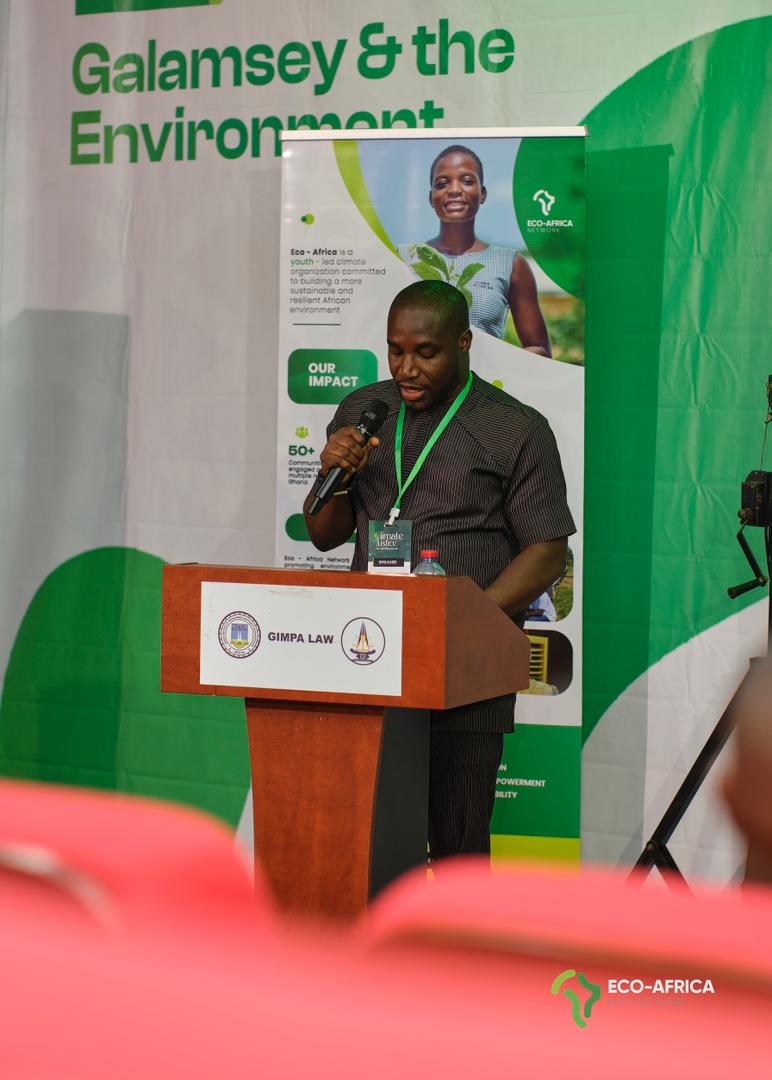
Eco-Africa Network has intensified calls for urgent action against illegal mining, commonly known as galamsey, while advocating stronger environmental sustainability measures in Ghana and beyond.
Held under the theme “Galamsey and the Environment,” the second edition of its flagship Climate Justice Conference brought together policymakers, academics, civil society actors, youth leaders and private sector stakeholders to examine the growing threat of illegal mining and propose practical, long-term solutions.
In his opening remarks on Monday, April 20, the Co-Founder of Eco-Africa Network, Caleb Adane Frimpong, stressed the urgency of addressing the crisis.
“Galamsey touches every core of life. The danger is not far away; it’s in our homes, rivers, and the water we consume. Its effects ripple through every aspect of our existence,” he said.
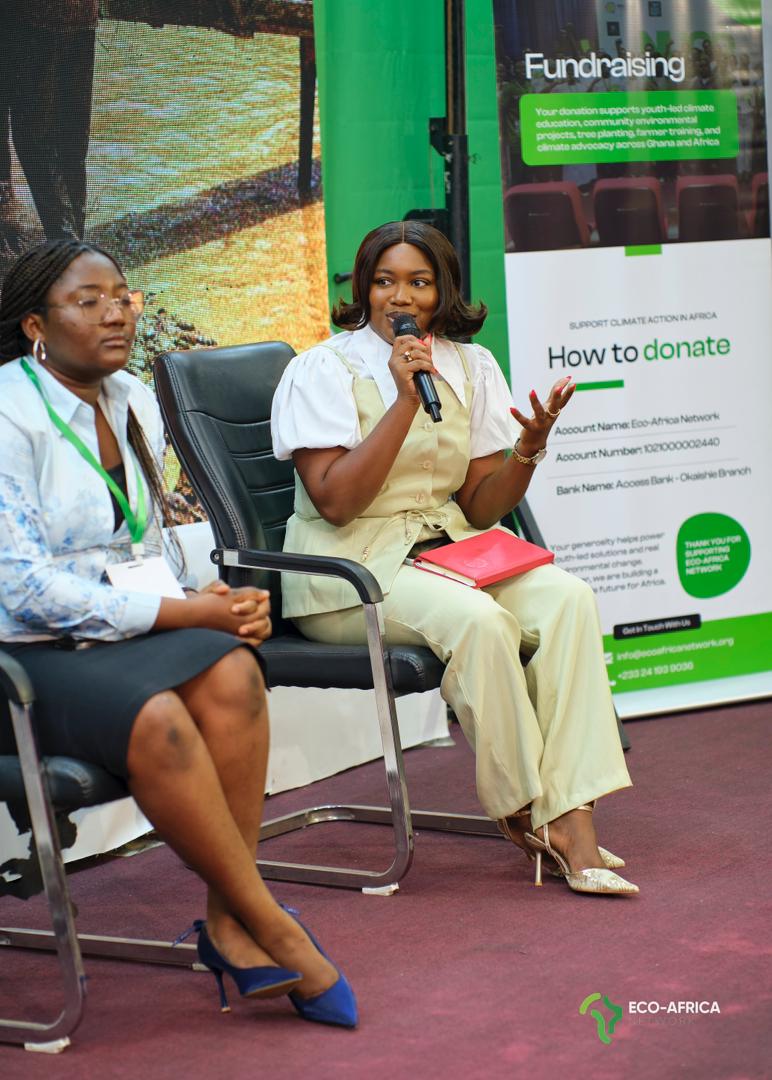
Delivering a keynote address, Senior Policy Analyst at the Africa Centre for Economic Transformation, George Boateng, highlighted the economic drivers behind illegal mining.
He noted that while galamsey poses severe environmental risks, it also provides livelihoods for many, stressing the need for policies that address unemployment and economic vulnerability.
“Ghana stands at a crossroads. The path we choose today will determine whether our mineral wealth becomes the foundation of lasting prosperity or the source of irreversible loss. Every year of inaction compounds the damage to our land, our water, our people, and our institutions,” he cautioned.
The conference is expected to culminate in a comprehensive policy document to be presented to the government, outlining strategic recommendations for addressing galamsey at its root.
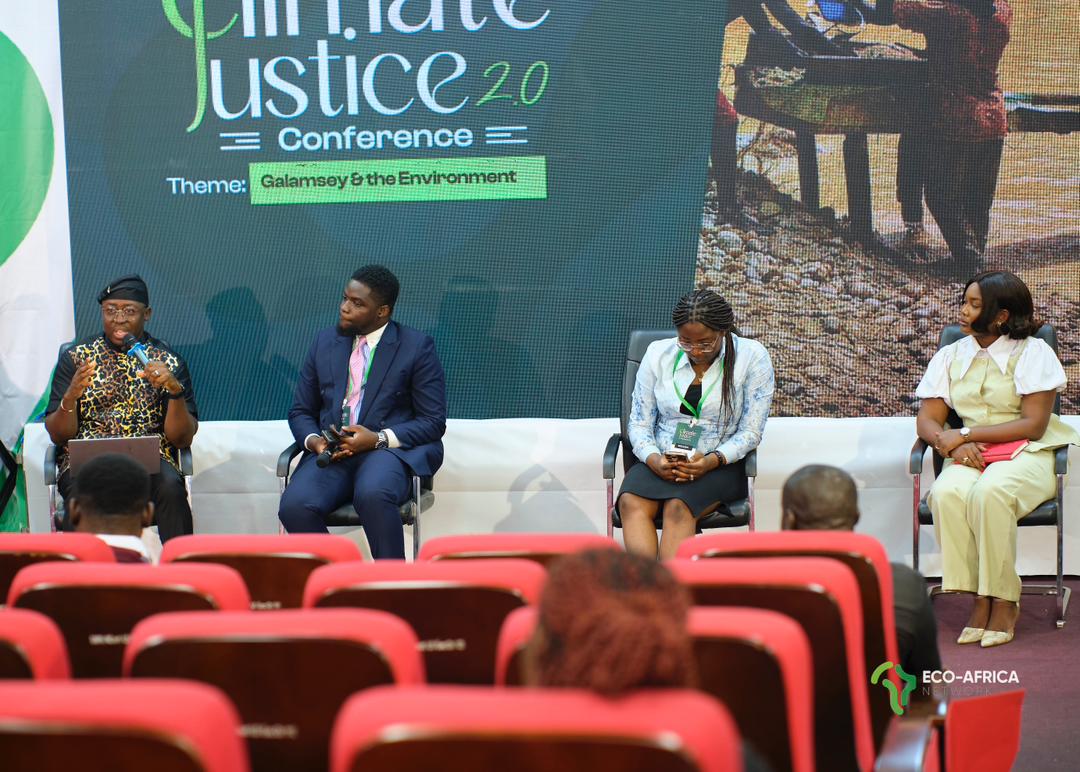
The event was organised in collaboration with partners including the Ghana Climate Innovation Centre, Ashesi University, Green Africa Youth Organisation, Africa Centre for Economic Transformation, and the GIMPA School of Law, among others.
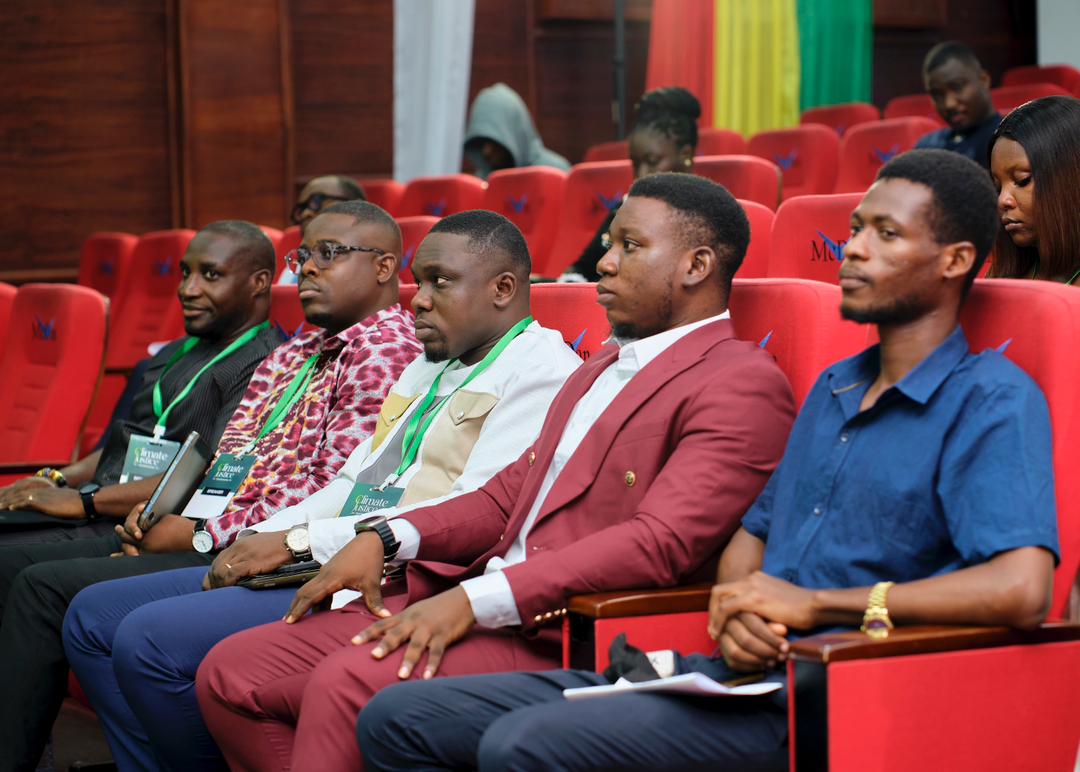
The conference also featured keynote addresses, expert presentations and panel discussions on the impact of galamsey on agriculture, water and food systems, the role of civil society and the private sector, and the link between youth employment and environmental sustainability.