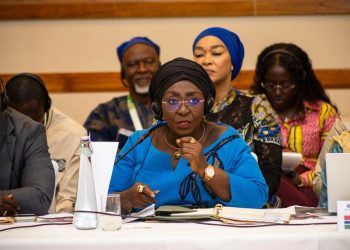
Economist and financial analyst, Senyo Hosi, has criticised Ghana’s continued fuel subsidy interventions, arguing that government policy should shift away from temporary relief at the pumps towards long-term investment in transport infrastructure.
His comments come after the Government of Ghana extended its fuel pump intervention, adjusting temporary relief measures aimed at cushioning consumers against rising petroleum prices amid global supply pressures.
Under the Ministry of Energy and Green Transition, government earlier introduced a one-month relief package beginning April 16, 2026, absorbing GH¢2.00 per litre on diesel and GH¢0.36 per litre on petrol. The intervention ended on May 15, 2026.
Following a review, government revised its support for diesel to GH¢1.07 per litre effective May 16, 2026, explaining that the adjustment was intended to balance consumer protection with the sustainable distribution of petroleum products amid geopolitical tensions affecting global fuel prices.
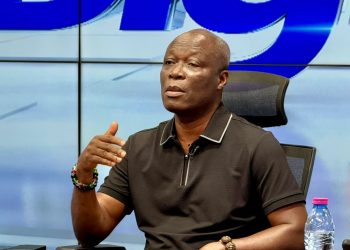
Speaking on The Big Issue on Channel One TV on Saturday, May 16, 2026, Mr Hosi said fuel subsidies do not address Ghana’s structural transport challenges.
“What the economy needs at the moment is a competitive, efficient, and affordable transportation and not fuel subsidy,” he said, describing current policy approaches as unsustainable.
He argued that repeated expenditure on subsidies has come at the expense of critical infrastructure investment.
Mr Hosi said Ghana’s transport inefficiencies, particularly long travel times between major cities, reflect years of underinvestment in systems such as rail transport.
“If we had invested in our rail network, we would not be discussing 16 hours on Accra-Kumasi road. We’re not interested in fuel subsidy, we are interested in transportation,” he added.