President John Dramani Mahama has warned against what he describes as attempts to shield global health institutions from meaningful reforms, insisting that the world cannot “prioritise institutional comfort over human survival” at a time when many countries remain vulnerable to health crises.
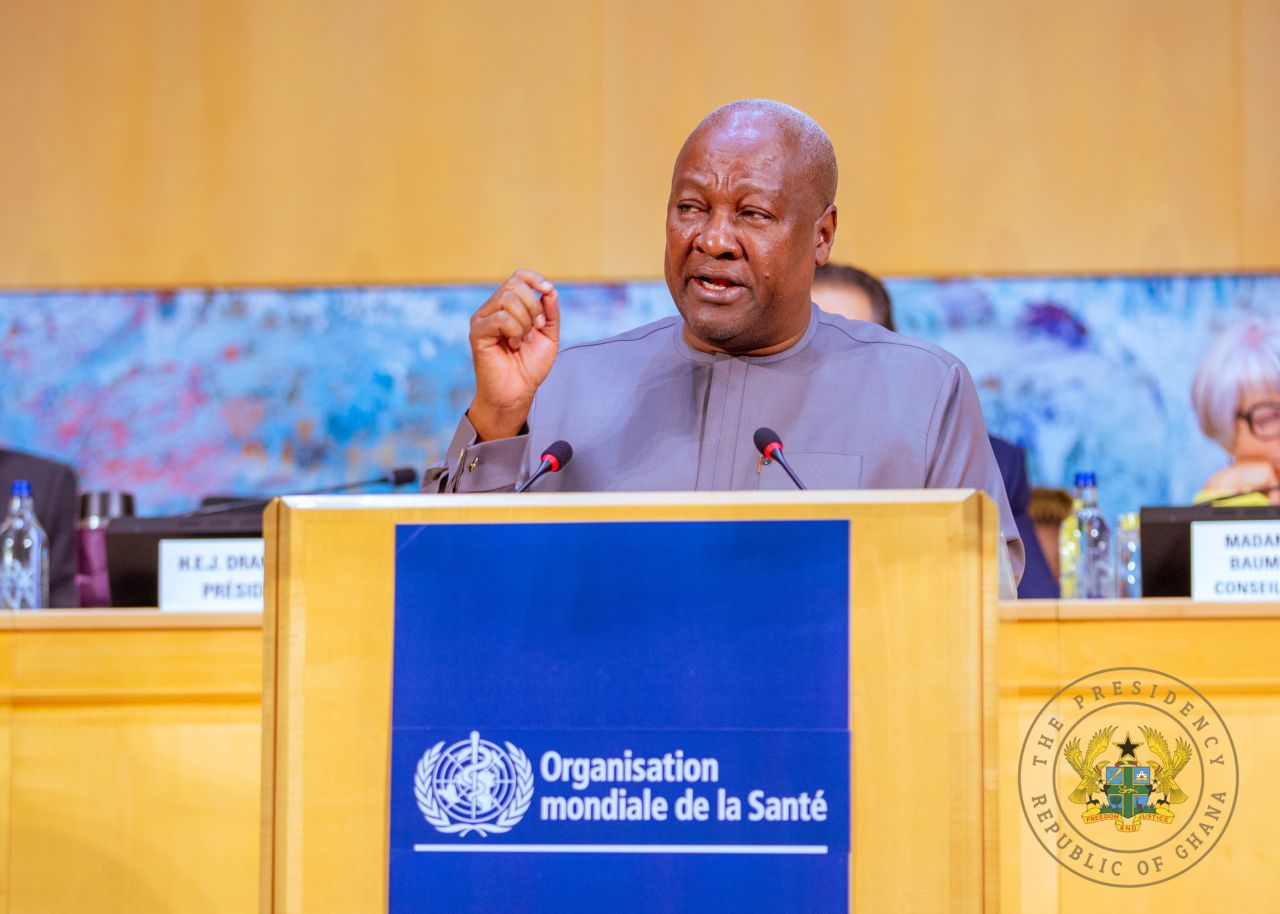
Speaking at the 79th World Health Assembly on Monday, May 18, President Mahama said proposals aimed at reforming the global health architecture would lose their relevance if they were designed to protect existing structures rather than address systemic weaknesses exposed by recent global health emergencies.
According to him, Ghana, which co-chaired the working group for the Lusaka Agenda, supports efforts to reform global health systems. Still, he expressed concern over indications that some draft resolutions may prevent recommendations that could lead to substantial institutional changes.
Ghana’s President argued that any reform process that avoids difficult but necessary decisions would amount to “merely performing a ritual.”
“Do not let the sight of those eating roasted maize force you to cook your maize seeds,” he said, stressing that reforms must focus on outcomes that protect lives rather than safeguarding bureaucratic structures.
President Mahama further used the platform to push for what he termed “health sovereignty” for African countries, explaining that sovereignty in healthcare should mean the practical ability of nations to finance essential services, regulate quality standards, produce medicines locally, and manage their own health data effectively.
He noted that Africa’s continued dependence on imported vaccines and medical supplies leaves the continent exposed to global supply chain disruptions and unequal access during health emergencies.
According to him, a continent that carries nearly 25% of the global disease burden while producing less than 1% of the world’s vaccines “is not sovereign, it is vulnerable.”
The President also highlighted the growing administrative burden on health officials in developing countries, arguing that ministers in the Global South now spend more time preparing donor reports than strengthening primary healthcare systems.
He called for a global health financing and governance model that gives countries greater control over their health priorities while ensuring sustainable and locally driven solutions.