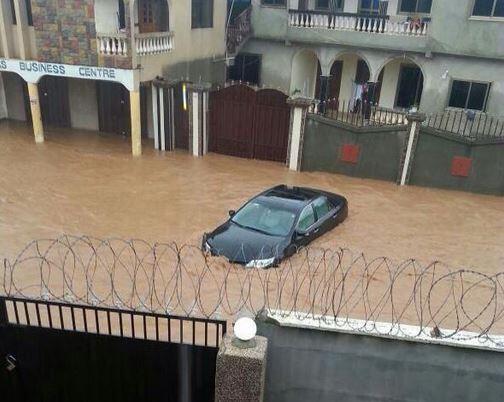
A Roads Engineer with the Ga East Municipal Assembly, Daniel Okyere, has attributed recurring flooding in parts of Accra to rapid urban development that has destroyed natural water retention systems and increased stormwater runoff into residential communities.
His comments follow heavy rains that triggered flooding in areas including Adenta, Pantang, and Akobobi, disrupting activities and rendering several roads impassable.
Speaking on Citi Business News on Thursday, June 4, 2026, Mr. Okyere said the loss of vegetation, alongside the conversion of wetlands and retention ponds into residential and commercial developments, has significantly worsened urban flooding.
“There are a lot of retention ponds that a lot of people have filled and built. Initially, if I should explain, those hills were green, it had foliage. So what happens is that when it starts raining and the runoff flows, the green slows it down,” he said.
He explained that the natural environment previously helped slow the movement of stormwater into the city, reducing the speed and impact of flooding.
“So initially, if it could take one hour for all the water coming from the Green Hills to Accra, it would take an hour. Now, because of human activities, it would take 15 minutes. And that is what we are experiencing,” he added.
Mr. Okyere further noted that many wetlands which previously served as retention areas have now been encroached upon and built over, removing natural buffers that once absorbed excess rainwater before it entered drainage systems.
“Now, most of them have also been filled, people have built on those waterways. So that is why we are experiencing all these floods, the urban floods,” he said.
He warned that the disappearance of these retention systems means rainwater now flows more rapidly into drainage channels, overwhelming them and contributing to repeated flooding in parts of the capital.