

• About Us
  • Privacy Policy
  • Terms of Use
  • Breaking News
  • Explainers
  • Listen Live
Monday, June 15, 2026
Citinewsroom - Comprehensive News in Ghana
Advertisement
  • Home
  • News
    • Regional News
      • Ahafo Region
      • Ashanti Region
      • Bono East Region
      • Bono Region
      • Central Region
      • Eastern Region
      • Greater Accra Region
      • Northern Region
      • North East Region
      • Oti Region
      • Savanna Region
      • Upper East Region
      • Upper West Region
      • Volta Region
      • Western Region
      • Western North Region
  • Sports
    • World Cup
  • Politics
  • Business
  • Entertainment
  • Articles
  • Explainers
  • Editorials
No Result
View All Result
Citinewsroom - Comprehensive News in Ghana
  • Home
  • News
    • Regional News
      • Ahafo Region
      • Ashanti Region
      • Bono East Region
      • Bono Region
      • Central Region
      • Eastern Region
      • Greater Accra Region
      • Northern Region
      • North East Region
      • Oti Region
      • Savanna Region
      • Upper East Region
      • Upper West Region
      • Volta Region
      • Western Region
      • Western North Region
  • Sports
    • World Cup
  • Politics
  • Business
  • Entertainment
  • Articles
  • Explainers
  • Editorials
No Result
View All Result
Citinewsroom - Comprehensive News in Ghana
No Result
View All Result

The digital health vacuum: Why Ghana’s legal frameworks are unprepared for medical AI -Michael Mensah writes

Leticia OseibyLeticia Osei
June 13, 2026
Reading Time: 2 mins read
ShareShareShareShare

Consider a standard clinical scenario: a physician at an urban hospital in Accra uses an AI-assisted diagnostic platform to evaluate complex patient laboratory trends.

The algorithm either flags an obscure clinical risk that saves a life, or it miscalculates, missing a critical diagnostic marker. The patient suffers from severe clinical complications.
Under current Ghanaian jurisprudence, a definitive question remains dangerously unanswered: Who is legally liable?

This is no longer a hypothetical exercise. Artificial intelligence and predictive software are rapidly entering Ghanaian healthcare infrastructure, yet the legislative and ethical frameworks required to govern them are lagging far behind. Valentine Golden Ghanem is stepping directly into this regulatory vacuum.

The Intersection of Medicine and Law

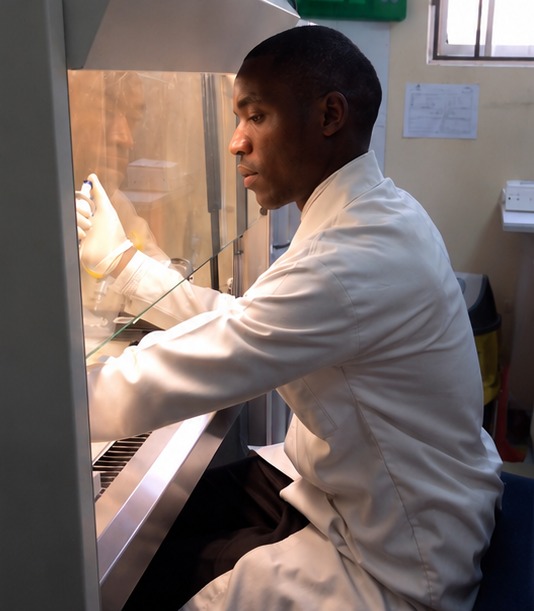
Ghanem approaches this legal frontier not as a theorist, but as a practitioner. With over a decade of frontline experience as a licensed medical scientist and an established publication record in spatial epidemiology, Ghanem has watched the digital transformation of African healthcare happen in real time.

Recognizing that technology is far outpacing policy, he enrolled in a Master of Laws (LL.M.) in International Law at Liverpool John Moores University, specializing in global health regulation and human rights frameworks. His objective is highly specific: to cultivate an interdisciplinary expertise that pure clinicians or pure legal scholars rarely possess.

“The individuals writing the rules for clinical AI must understand both the mathematical parameters of an algorithm and the messy realities of patient care.”

Three Critical Vulnerabilities

Ghanem’s interdisciplinary analysis identifies three urgent regulatory deficits in Ghana’s current health ecosystem:

• The Liability Vacuum: The Public Health Act contains no provisions addressing AI-augmented medical decision-making. If an automated system contributes to a misdiagnosis, the division of responsibility between the attending clinician, the healthcare facility, and the software developer remains completely ambiguous.

• Data Protection Lag: AI models require vast volumes of highly sensitive longitudinal patient data to maintain predictive accuracy. While Ghana operates a Data Protection Commission, the statutory text was designed for static databases, leaving patient data vulnerable to commercial exploitation and unconsented secondary analyses in the era of high-throughput AI.

• Demographic and Algorithmic Bias: The vast majority of commercial medical AI models are trained on Western datasets. Applying an algorithm optimised for populations in London or Chicago directly to patients in Kumasi introduces major clinical risks. Differences in genetic profiles, clinical presentation, and social determinants mean that a tool’s foreign validation does not guarantee domestic safety.
The Path Forward

Ghanem does not advocate for slowing the adoption of digital health technologies. In a public health system navigating chronic workforce shortages and severe geographic inequities, the efficiency gains of clinical AI are indispensable.

Instead, he argues for a proactive regulatory framework: mandatory domestic validation of foreign clinical models using local patient data before deployment, specialised health-data governance standards, and clear statutory definitions of liability. Without these guardrails, technological adoption isn’t progress—it is simply unmanaged risk.

Source: Michael Mensah
Tags: AIGhana NewsMichael Mensah
ShareTweetSendSend
Previous Post

2026 World Cup tickets will reach fans before games – Kofi Adams

Next Post

‘Mine together, process together’: Ghana rallies West Africa around industrial agenda

Related Posts

Business

BoG warns IMTOs: Register by July 31 or cease operations

June 15, 2026
Business

GNPC seeks partners to unlock Volta Basin’s oil and gas potential

June 15, 2026
Treasury Bill- Meaning, Features, Benefits and More
Business

Treasury bill auction oversubscribed as Government raises GHS 8.29bn

June 15, 2026
File Image of a vehicle being refilled at a fuel station
Business

Fuel prices in Ghana likely to fall as global oil prices drop after US-Iran peace deal

June 15, 2026
Featured

No trained teachers, collapsing classrooms: Garkuon school in distress

June 15, 2026
File Photo of donated medical equipment
Featured

Taxes on donated medical supplies hinder healthcare support — Beatrice Wiafe-Addai

June 15, 2026
Next Post
Minister for Trade, Agribusiness and Industry, Elizabeth Ofosu-Adjare

‘Mine together, process together’: Ghana rallies West Africa around industrial agenda

ADVERTISEMENT
Citinewsroom - Comprehensive News in Ghana

CitiNewsroom.com is Ghana's leading news website that delivers high quality innovative, alternative news that challenges the status quo.

Archives

Download App

Download

Download

  • About Us
  • Privacy Policy
  • Terms of Use
  • Breaking News
  • Explainers
  • Listen Live

© 2024 All Rights Reserved Citi Newsroom.

No Result
View All Result
  • Home
  • News
    • Regional News
      • Ahafo Region
      • Ashanti Region
      • Bono East Region
      • Bono Region
      • Central Region
      • Eastern Region
      • Greater Accra Region
      • Northern Region
      • North East Region
      • Oti Region
      • Savanna Region
      • Upper East Region
      • Upper West Region
      • Volta Region
      • Western Region
      • Western North Region
  • Sports
    • World Cup
  • Politics
  • Business
  • Entertainment
  • Articles
  • Explainers
  • Editorials

© 2024 All Rights Reserved Citi Newsroom.