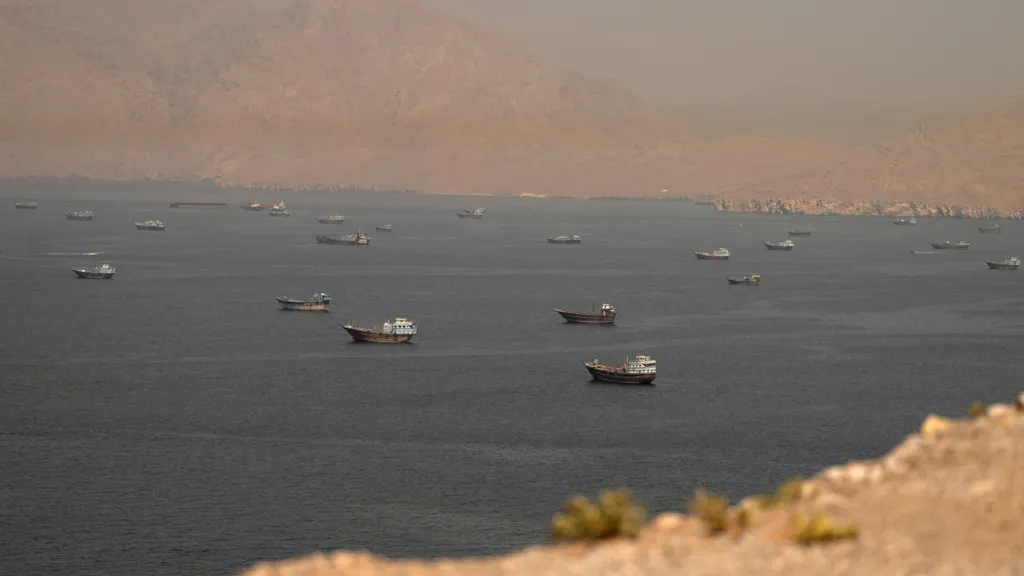
The US has conducted new strikes on Iran following a drone attack on a Panama-flagged vessel in the Strait of Hormuz on Saturday, June 27.
According to the US Central Command (Centcom), multiple targets across Iran were struck in direct response to what it described as “continued aggression” against commercial shipping.
In retaliation, Iran’s Islamic Revolutionary Guard Corps (IRGC) said it launched missiles and drones at US infrastructure in Kuwait and Bahrain, according to a statement carried by state media. Following the exchange of fire, both Washington and Tehran accused each other of violating the ceasefire agreement.
Centcom said Iran had been given the opportunity to honour the ceasefire but failed to do so after its forces launched a one-way attack drone that struck the MT Kiku, a Panama-flagged tanker.
In response, the US military said its fighter jets carried out strikes on 10 Iranian military targets in and around the Strait of Hormuz. The targets included military equipment, communication systems, air defence sites and drone storage facilities.
However, the IRGC claimed the US had attacked five Iranian coastal posts under what it described as the “pretext of the IRGC Navy confronting the offending ship.”
The IRGC further stated that it retaliated by launching ballistic missiles and drones at what it described as “eight key pieces of infrastructure,” including the Ali al-Salem Air Base in Kuwait and the US Fifth Naval Fleet headquarters in Port Salman, Bahrain, claiming the facilities had been destroyed.
Despite the claims, a US official told Reuters there were no reported American casualties or significant damage to US facilities in the Middle East.
The IRGC maintained that, under the Memorandum of Understanding signed earlier this month, Iran has the authority to regulate passage and navigation through the Strait of Hormuz and warned that vessels found violating the agreement would face tougher measures.
“Any potential enemy aggression, under any pretext, even if the aggressions are against minor targets, as happened last night and tonight, will have a crushing response,” the statement said.
The IRGC also accused the US of breaching the ceasefire agreement reached under the memorandum, warning that the latest actions could bring the entire process to an end.
Similarly, Iran’s Foreign Ministry condemned what it described as the “brutal attacks,” calling them a violation of the ceasefire and accusing Washington of failing to honour its commitments.
Shortly after the latest US strikes were announced, President Donald Trump wrote on Truth Social that it was “very possible” Tehran would “never learn.”
“There may come a point when we are no longer able to be reasonable, and will be forced to militarily complete the job that we very successfully started,” Trump wrote.
He added: “If that happens, the Islamic Republic of Iran will no longer exist!”
Meanwhile, Kuwait and Bahrain reported that their air defence systems had been activated following Iran’s retaliatory attacks.
The Kuwaiti Armed Forces said its air defence systems were intercepting hostile missiles and drones, urging residents to follow official security instructions. Bahrain’s Ministry of Interior also advised citizens to remain calm and seek the nearest safe location.
Despite the renewed hostilities, Centcom said commercial vessels continued to transit the Strait of Hormuz.
The latest escalation comes less than a day after the US carried out retaliatory strikes on Iran over what it said was a drone attack on the Singapore-flagged cargo ship, MV Ever Lovely, on June 25.
Centcom described those earlier strikes as “a powerful response” to what it called Iran’s “unwarranted aggression” against commercial shipping, arguing that the attack constituted a violation of the ceasefire.
Tehran, however, insisted the cargo ship had used an unauthorised route through the Gulf waterway and argued that the US retaliatory strikes themselves amounted to a breach of the ceasefire agreement.
In a statement released on Saturday morning, Iran’s Foreign Ministry said it had carried out further strikes against targets linked to American forces in response, blaming what it called the “treaty-breaking US regime” for the renewed confrontation.
The US and Iran agreed on June 17 to end hostilities under a 14-point Memorandum of Understanding, which required Iran to make its “best efforts” to ensure the safe passage of commercial vessels through the Strait of Hormuz without imposing charges for 60 days.
The Strait of Hormuz remains one of the world’s most strategic waterways for oil and gas shipments. It was effectively closed by Tehran after the US and Israel launched attacks on Iran at the end of February.
The disruption sent global oil prices sharply higher and interrupted the movement of other key commodities, including fertiliser.
In recent days, President Trump and other US officials had insisted negotiations with Iran were progressing positively, saying Tehran had abandoned plans to impose tolls on vessels using the Strait of Hormuz.
In a Truth Social post on Wednesday, Trump said Iran had assured the US there would be “no tolls, no insurance costs and no other charges of any kind being sought or received.”
“If this is false information, negotiations would end, immediately,” he added.
The US has condemned reports that Iran intends to charge fees to tankers transiting the Strait of Hormuz, with many analysts arguing such a move would violate international maritime law.
Earlier this week, Iranian and Omani officials met in Muscat to discuss the future management of navigation through the strategic waterway. Omani Foreign Minister Badr Al-Busaidi said both countries remained committed to ensuring toll-free and safe passage.
However, Iran’s chief negotiator, Mohammed Bagher Ghalibaf, maintained that “everyone should know that the administration of the Strait of Hormuz will never go back to the way it was before the war.”