



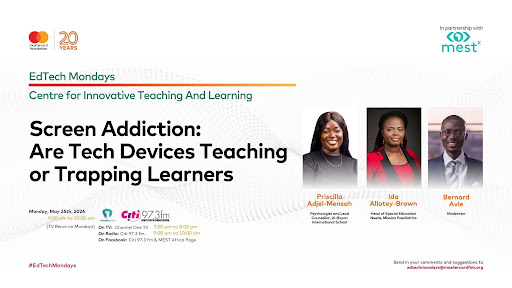
According to global estimates, nearly 40% of children aged 8 to 12 are using social media despite minimum age restrictions. This raises important questions for parents, educators, and policymakers. How can we prepare children for the digital future without sacrificing their creativity, social skills, mental health, and overall well-being?
This critical issue was the focus of the May episode of EdTech Mondays, where host Bernard Avle was joined by psychologist and lead counsellor Priscilla Adjei Mensah and Ida Alottey-Brown, Head of Special Educational Needs at Mission Paediatrics.
The Fine Line Between Digital Learning and Digital Dependence

While many adults are impressed by how quickly children learn to navigate smartphones and tablets, the experts emphasized that technological proficiency alone should not be celebrated without considering its broader effects.
“Technology is here to help us,” Ida Allotey-Brown explained. “But it should not replace the developmental experiences children need, such as communication, social interaction, physical activity, and adaptive life skills.”
The concern arises when screens become a child’s primary source of engagement throughout the day, limiting opportunities for face-to-face interactions, physical exploration, and emotional development.
Watch Ida Allotey Brown explain this
Screens as a Soothing Mechanism
For many parents, screens have become a convenient way to calm a child who is upset, restless, or difficult to manage. A crying toddler is handed a phone, a bored child is given a tablet, and within seconds, the tears stop, and the room becomes quiet.
While this may seem like a harmless solution, it is important to consider what screens might be replacing during these critical early years of development.
Priscilla Adjei Mensah also noted that many parents unintentionally use screens as emotional pacifiers. Over time, this can contribute to unhealthy dependency.
Understanding Screen Addiction

Using screens as a soothing mechanism can gradually create a dependency that, if not managed carefully, may develop into screen addiction. When children repeatedly turn to screens for comfort, entertainment, or emotional regulation, they can begin to rely on them as their primary source of stimulation and relief.
Over time, this reliance can make it increasingly difficult for them to cope with boredom, frustration, or other emotions without a device.
The science behind this lies in how the brain responds to digital content. Many apps, games, and videos are designed to be highly engaging, providing constant stimulation through bright visuals, sounds, notifications, and rewards.
Each time a child interacts with this content, the brain releases dopamine, a neurotransmitter associated with pleasure, motivation, and reward. This creates a positive feedback loop, encouraging the child to seek out the experience again and again.
Ida Allotey-Brown talks about the signs of screen addiction
The Significance of Boredom
One of the most insightful moments from the discussion centered on the importance of boredom. In today’s world, many adults rush to eliminate boredom by providing entertainment at the first sign of restlessness.
However, Priscilla Adjei Mensah emphasized that boredom plays a crucial role in child development. It is during unstructured moments that children often develop creativity, process emotions, reflect on experiences, build problem-solving skills, and strengthen their sense of identity.
When every moment is filled with screen-based stimulation, children may miss valuable opportunities for growth, creativity and self-discovery.
Priscilla Adjei Mensah explains in detail
Practical Strategies for Dealing with Screen Addiction
The experts cautioned against treating screen addiction with a one-size-fits-all approach. While some families may choose temporary digital detoxes, simply taking devices away without a plan can lead to frustration and conflict.
Ida Allotey-Brown emphasized that children are more likely to follow rules when they understand the reasons behind them and feel included in the decision-making process. The experts also shared some practical tips for dealing with screen addiction.
Watch the Full Episode
Catch up on this powerful conversation with host Bernard Avle and guests Priscilla Adjei Mensah and Ida Alottey-Brown.
Watch the full episode now and share your thoughts in the comments section.
Stay Engaged: EdTech Mondays continues to facilitate these high-stakes discussions on the last Monday of every month. Join us as we navigate the path forward together.
#EdTechMondays #EdTechMondaysGhana #ScreenAddiction