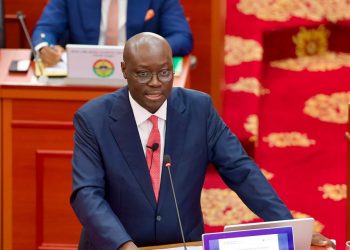
Finance Minister Dr. Cassiel Ato Forson has highlighted the significant impact of the establishment of the Ghana Gold Board (GoldBod), revealing that the initiative generated an additional $15 billion in foreign exchange inflows.
The policy he stated has helped curb gold smuggling, formalise the gold trade and ensure that a greater share of the country’s mineral wealth benefits the Ghanaian economy.
Presenting the 2026 Mid-Year Budget Review in Parliament on Thursday, July 23, he said the GoldBod was introduced as part of broader fiscal reforms aimed at supporting inflation targeting, ensuring exchange rate stability and strengthening Ghana’s external reserves.
“Through this intervention, Ghana generated an additional $15 billion in foreign exchange inflows from gold, significantly strengthening reserve accumulation and supporting exchange rate stability,” he told Parliament.
According to him, the policy also contributed to a marked improvement in the country’s current account balance, which increased from a surplus of 1.9% in 2024 to 8.3% in 2025.
“This single policy measure improved Ghana’s current account balance by 6.4 percentage points. It represents a fourfold increase in the current account surplus in just one calendar year,” he stated.
Ato Forson stressed that the GoldBod initiative was not merely a gold sector reform but a broader macroeconomic stabilisation strategy designed to strengthen the cedi, build external buffers and restore investor confidence in the economy.
To sustain the gains, he said government has developed the Ghana Accelerated National Reserve Accumulation Policy (GANRAP), which seeks to increase Ghana’s international reserves to the equivalent of 15 months of import cover by the end of 2028.
He further announced that government has reached an agreement with large-scale mining companies to purchase 30% of their annual gold production for refining by local refineries, a move aimed at boosting domestic value addition while supporting reserve accumulation.
The Finance Minister also disclosed that government has amended the Bank of Ghana Act to make inflation targeting a shared responsibility between the Ministry of Finance and the central bank, a measure he said would strengthen coordination between fiscal and monetary policies and consolidate macroeconomic stability.