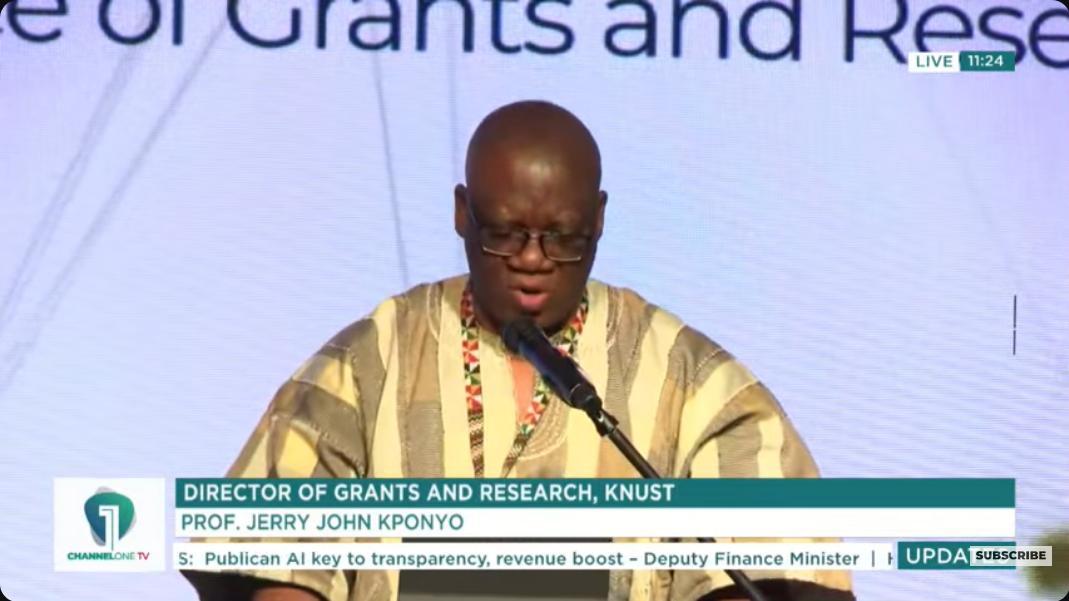
Ghana risks losing its brightest technology talent and widening inequality gaps if urgent safeguards are not built into the country’s artificial intelligence agenda, Director of Grants, and Research at KNUST, Professor Jerry John Kponyo, has warned.
Speaking at the launch of the National Artificial Intelligence Strategy, Prof. Kponyo said while the policy presents significant opportunities for job creation, it also carries serious risks—particularly the potential for increased brain drain.
“Most importantly, we can build thousands of new high-value jobs across the AI value chain,” he said. “But we must be vigilant about the threats we must guard against.”
He cautioned that without deliberate policy interventions, Ghana could see its top AI and technology talent migrate abroad in search of better opportunities, undermining local capacity development.
“We face the very real threat of brain drain. As our brightest local tech talent seek opportunities abroad, we risk widening the inequality gap,” he noted.
Prof. Kponyo also raised concerns about weak data protection regimes and the disruptive impact of automation on traditional jobs, warning that failure to address these issues could exacerbate socio-economic disparities.
He stressed the need for strong data privacy laws and robust reskilling programmes to prepare the workforce for shifts driven by artificial intelligence.
In addition, he called for a sustainable approach to developing Ghana’s AI ecosystem, cautioning against over-reliance on external funding.
“We cannot rely solely on short-term donor-funded initiatives. Our ecosystem must be self-sustaining,” he added.