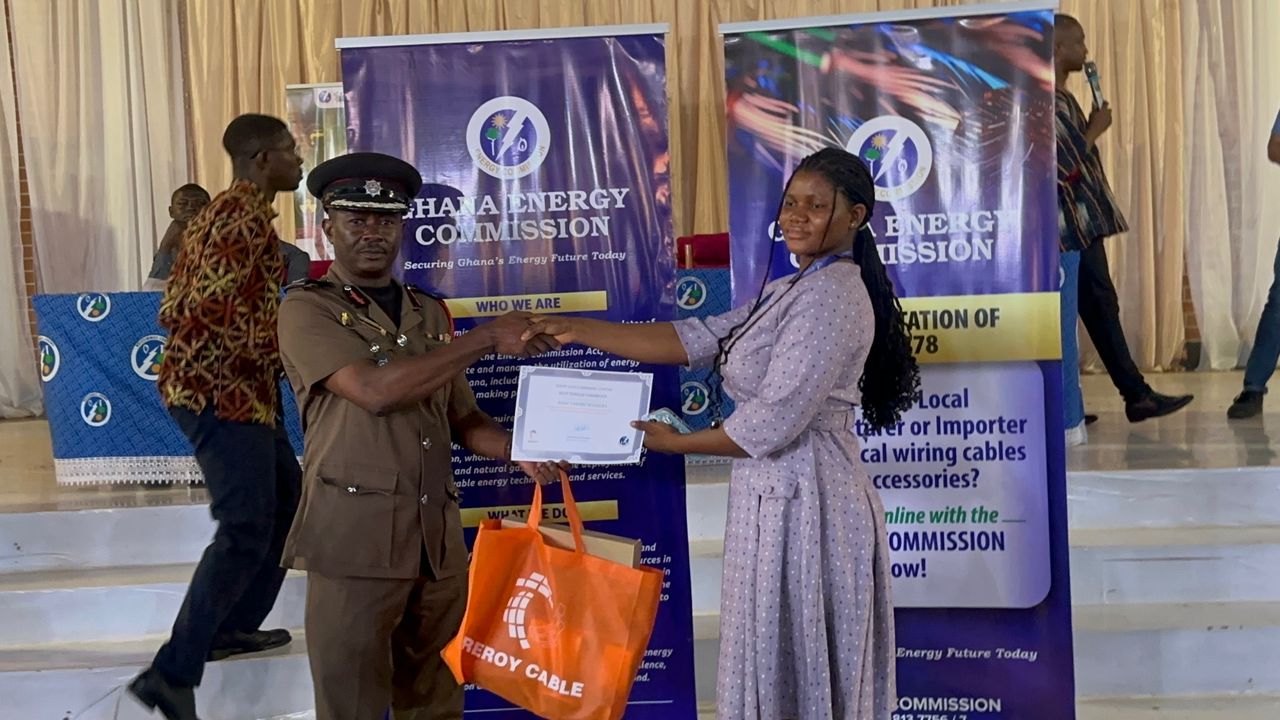
The Ghana National Fire Service has raised fresh concerns over substandard electrical wiring, warning that poor installations remain a leading cause of fire outbreaks in the Northern Region.
Speaking at the 24th Electrical Wiring Certification Awards Ceremony organised by the Energy Commission in Tamale, Assistant Chief Fire Officer Grade One, Joseph Koranteng, stressed the need for strict adherence to safety standards.
“We know that using sub standard wires for electrical wiring is one of the leading causes of fire outbreaks in our homes and businesses leading to the loss of lives and properties,” he said.
He commended the enforcement of the Electrical Wiring Regulations 2011, noting that it has helped curb the activities of unqualified electricians and improved safety standards nationwide.
“The passage of the electrical wiring regulation marked a turning point in our national safety architecture,” he added.
The event, held under the theme “Training Today’s Youth, Certifying Tomorrow’s Electrical Experts,” saw 275 trainees graduate as certified electricians.
Mr Koranteng praised the graduates for completing a rigorous certification process and urged them to uphold professionalism and public safety.
Also addressing the ceremony, Samuel Owusu of the Energy Commission described the event as a celebration of skill and commitment to safety.
“Proper electrical work is essential in safeguarding lives and property,” he said, encouraging the graduates to continue learning and support the training of others.
In a speech read on her behalf, Acting Executive Secretary of the Energy Commission, Adwoa Serwaa Bonsu, highlighted progress made under the certification programme anchored on L.I. 2008.
She warned that untrained electrical work continues to result in fires, injuries and significant losses, stressing that proper training and certification are critical.
She also announced new initiatives, including nationwide registration of apprentices, aimed at formalising training, tracking progress and improving policy decisions, while addressing challenges such as low female participation in the sector.
She reiterated that investing in training and certification is essential to improving public safety, strengthening professional standards and supporting national development.