The Minority in Parliament has said that the Bank of Ghana (BoG) is “policy insolvent”, insisting that the central bank can no longer sustain its core monetary operations without resorting to extraordinary measures.
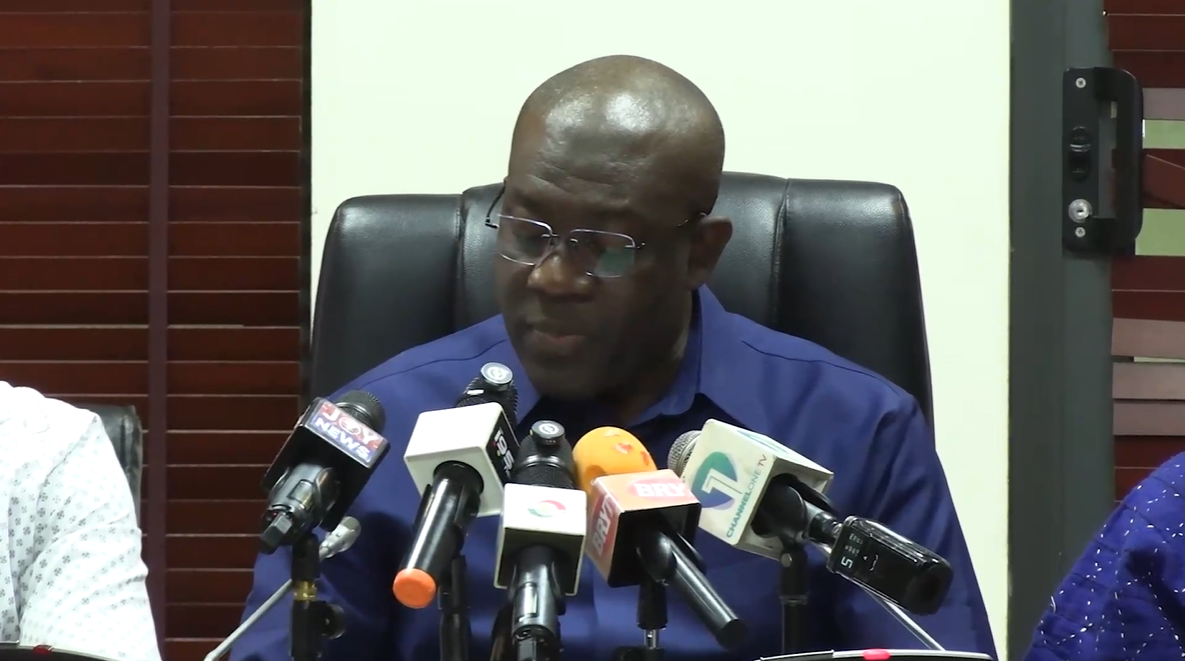
Addressing a press conference in Accra on Sunday, May 3, the Ranking Member on the Economy and Development Committee of Parliament, Kojo Oppong Nkrumah said the minority’s assessment is based on a detailed review of the BoG’s 2025 audited financial statements, which it argued reveal a far weaker position than officially presented.
At the centre of the claim is what the Minority describes as a misleading portrayal of the Bank’s policy solvency — a key indicator of its ability to fund monetary policy operations from internally generated income.
According to the audited accounts, the BoG reported operational income of GH¢22.2 billion against a sterilisation cost of GH¢16.7 billion, suggesting a surplus of GH¢5.5 billion and, by extension, a strong policy solvency position.
However, the Minority contends that this conclusion is flawed, arguing that the income figure includes a one-off gain of GH¢9.6 billion from the sale of gold reserves — an item it says should not be treated as sustainable operational income.
Stripping out that gain, the caucus said, reduces operational income to GH¢12.7 billion, leaving a deficit of approximately GH¢4 billion when set against the cost of open market operations.
“Minus GH¢4 billion puts the Bank of Ghana in policy insolvency,” Kojo Oppong Nkrumah stated, insisting that reliance on asset sales to bridge funding gaps is neither prudent nor sustainable.
The minority further alleged that the gold sale — reportedly involving a significant portion of the country’s reserves — was undertaken to “create artificial revenue” and mask the Bank’s underlying financial position.
“A central bank that needs asset sales to avoid policy insolvency is operating on borrowed time,” the caucus warned.
The Minority linked the situation to what it described as costly policy reversals by the current management of the Bank, particularly the abandonment of earlier liquidity management tools in favour of more expensive sterilisation instruments.
It pointed to a sharp rise in interest payments on BoG bills, which it said surged to over GH¢14 billion in 2025, as evidence of mounting operational strain.
“These are not unavoidable costs,” the caucus argued. “They are the direct result of policy choices that have significantly increased the financial burden on the Bank.”
The group cautioned that policy insolvency has serious implications for the central bank’s ability to perform its statutory mandate, including maintaining price stability and supporting the broader economy.
It warned that without urgent corrective measures, the BoG could require a government bailout to remain operational.
The Minority also criticised what it described as attempts to downplay the Bank’s financial difficulties, accusing authorities of presenting a selective narrative that obscures the full extent of the problem.
While acknowledging that the BoG’s financial position has been under pressure in recent years, the caucus argued that the 2025 figures mark a reversal of earlier recovery trends.
The Bank recorded losses of GH¢13.23 billion in 2023 and GH¢9.49 billion in 2024, before reporting a headline loss of GH¢15.6 billion in 2025.
The Minority, however, maintains that the true economic loss is significantly higher when broader accounting measures are considered.
It has indicated that it will outline proposals in the coming days aimed at restoring policy solvency and stabilising the central bank’s finances.
“This is not a moment for vindication,” the caucus said. “It is a moment for urgent action to protect the integrity and sustainability of the Bank of Ghana.”