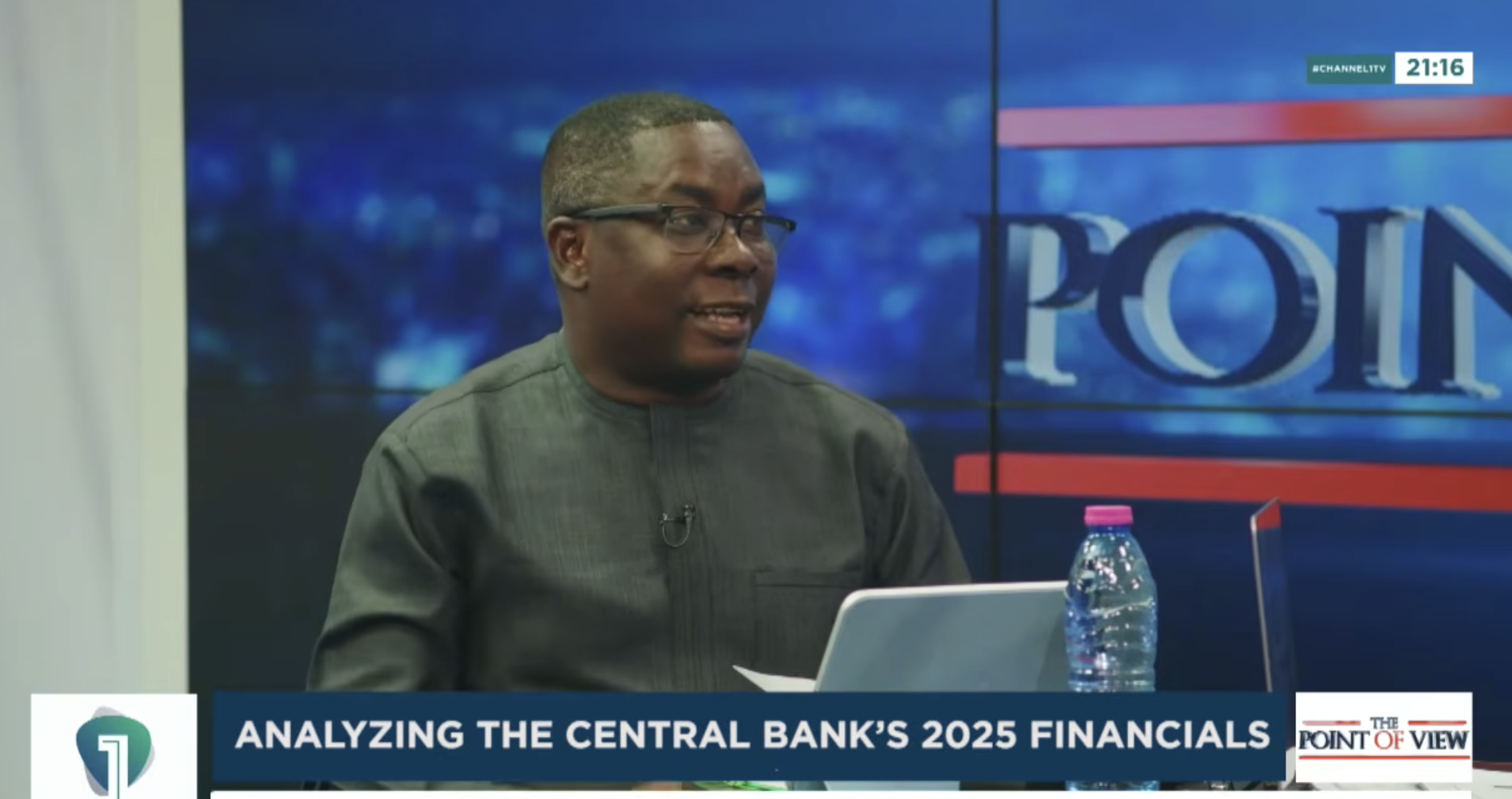
The Member of Parliament for Tano North and Member of Parliament’s Finance Committee, Dr Gideon Boako, has cautioned against describing the Bank of Ghana as a loss-generating institution, stressing that while the central bank is not designed to make profits, it must also not be allowed to accumulate unsustainable losses.
Speaking in response to recent public debate on the Bank of Ghana’s 2025 financial performance, Dr Boako said the central bank plays a critical national role that goes beyond profit and loss considerations.
“The BoG is not a regular bank. People have said it is not profit making. We must also admit that it is not a loss-making machine,” he said Channel One TV’s The Point of View on Wednesday May 6.
He explained that the central bank’s core mandate is not to generate profit, but that this does not mean it is intended to operate at a loss.
According to him, the Bank of Ghana must remain stable, functional, and fully capable of carrying out its responsibilities at all times.
“The fact that the central bank’s core mandate is not to make profit is not also to suggest that the central bank is supposed to make losses,” he reiterated.
Mr Boako stressed that the Bank of Ghana must always be in a position to support the economy and respond to national financial challenges whenever needed.
He warned that policy decisions or financial pressures that weaken the central bank could have long-term consequences for the country’s economic stability.
“At the end of the day, we all agree that it must be in existence at all times, it must be functional, it must be operational, it must have the capacity to finance what it wants to finance for the good of the country,” he said.
He further cautioned that in addressing national economic challenges, care must be taken not to weaken the central bank.
“In our attempt to solve the problems of the country, we must not get the central bank on its knees. If we do that, tomorrow the central bank will not be in existence to address the challenges we want them to address for us,” he said.
Mr Boako added that while losses at the central bank may be part of broader financial dynamics, their scale and implications should be a concern for policymakers and the public.
“That is why the magnitude of the losses should be of concern to all of us,” he said.