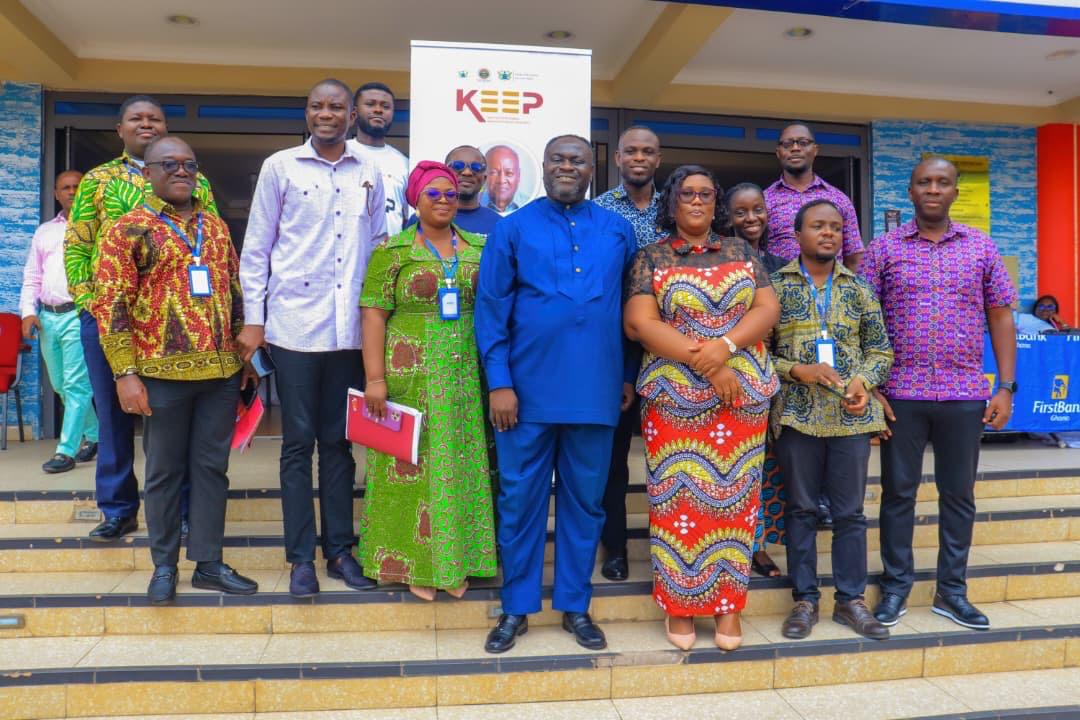
Education and Artificial Intelligence (AI) experts are advocating for the integration of AI technologies and strategic learning approaches into Ghana’s education system to align with modern global education trends.
This call was made during the Key Educational Enhancement Project (KEEP) 2025 Conference, organised by the International Community of Learning and Social Spectrums (ICLASS) under its flagship Key Africa Project.
The conference brought together teachers, school administrators, and educational stakeholders to discuss innovative approaches aimed at rebranding the Ghanaian teacher and preparing schools for the future of learning.
Held under the theme:
“Building Resilient Safeguards: Rebranding the Ghanaian Teacher Through Their Multiple Intelligences,”
the event addressed critical gaps in Ghana’s education system, including limited AI adoption, inadequate safeguarding structures, and outdated teaching models.
At the conference, education experts emphasised that Ghana’s schools must embrace AI-driven learning tools to remain competitive in a rapidly evolving knowledge economy. Discussions highlighted how AI can personalise learning, support inclusive classrooms, and simplify administrative tasks.
Globally, AI-powered tutoring systems are revolutionising education, enabling teachers to deliver differentiated instruction based on learners’ unique strengths and challenges, organizers noted.
Speaking to the media, one of the speakers, Akwasi Boateng Osei, a Tech Trainer and expert, lamented the gaps in Ghana’s education system regarding AI integration.
He called for collaboration between educators and industry stakeholders but cautioned that unregulated AI use poses risks if educators and students are not properly guided.
He said, “Parents and teachers should adapt to AI technologies so they can guide children to use them responsibly. Educators have not been adequately resourced in AI and emerging technologies, but there is still room for improvement. Industries should support the education sector to adapt because most tutors were not trained in these areas. There has to be synergy and collaboration to improve our education system.”
Teachers were therefore trained to leverage AI responsibly, adopting platforms that enhance, not replace, human intelligence, while addressing ethical considerations such as data privacy and academic integrity.
A major focus of KEEP 2025 was moving away from the traditional one-size-fits-all teaching approach. Dr. Marian Baaba-Alargi, an educational psychologist and consultant, introduced teachers to the Multiple Intelligences Theory, which recognises that learners process information differently, through musical, bodily-kinesthetic, interpersonal, visual-spatial, and naturalistic intelligences, among others.
Teachers were trained to redesign lesson plans, diversify instructional strategies, and adopt student-centered teaching methods that boost engagement and learning outcomes. By helping educators identify their own dominant intelligences, the programme aimed to redefine teacher identity, making them more flexible, creative, and responsive to diverse classroom needs.
Another critical issue addressed at the conference was safeguarding the responsibility of schools to create safe, supportive, and thriving learning environments. Educators were introduced to comprehensive safeguarding frameworks, learning to recognize early signs of abuse, neglect, and exploitation among students.
Participants were also guided on current safeguarding policies, reporting protocols, and the role of Designated Safeguarding Leads in schools. Dr. Marian Baaba-Alargi stressed that every teacher, not just school leaders, has a duty to ensure child protection and promote a culture of accountability.
Representing the Ashanti Regional Director of Education and the Kumasi Metro Director of Education, Judith Mensah-Panford, the Head of Planning and Statistics at the Ashanti Regional Education Service, commended the organizers of the conference and urged teachers to participate fully and implement the knowledge gained in their classrooms to improve education in the region.
Participants expressed their excitement about the conference and the knowledge shared, pledging to implement the lessons learned effectively.
The KEEP 2025 Conference equipped participants with practical tools, frameworks, and digital skills to help transform teaching and learning in Ghanaian classrooms. A robust monitoring and evaluation framework has been deployed to track implementation, with outstanding schools and educators set to be recognised for adopting innovative practices.
The ICLASS and Key Africa Project initiative is part of a broader effort to align Ghana’s education system with global trends while safeguarding student welfare and boosting teacher effectiveness.