Key Takeaways
• Middle East tensions can affect Ghana through the oil markets. Nearly 20% of global oil supply passes through the Strait of Hormuz, making the region highly sensitive to geopolitical conflict.
• Oil price increases are transmitted quickly into Ghana’s economy. Higher global crude prices raise domestic fuel prices, transport costs, and inflation.
• Ghana’s deregulated petroleum pricing system accelerates this transmission. Pump prices reflect international petroleum prices, exchange rates, taxes, and distribution margins under the supervision of the National Petroleum Authority.
• History shows the pattern. Events such as the 1973 Oil Crisis, the 1990–1991 Gulf War, and the Russian Invasion of Ukraine illustrate how conflicts affecting oil supply routes can trigger global economic shocks.
Introduction
When tensions rise in the Middle East, most people in Ghana may not immediately think about the price of fuel in Accra or the cost of tomatoes in Makola Market. Yet history shows that conflicts thousands of kilometres away can quickly reach Ghana’s economy through global oil markets.
What begins as a geopolitical confrontation in the Persian Gulf can eventually affect transport fares, food prices, and even the stability of the Ghanaian Cedi. In today’s interconnected economy, energy markets provide one of the fastest channels through which distant conflicts produce local consequences.
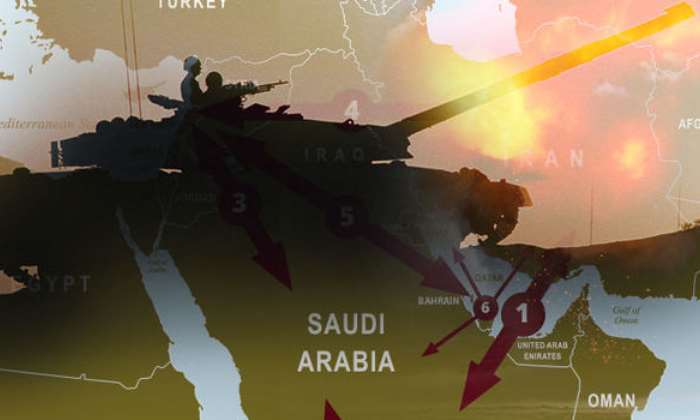
Recent tensions involving the United States, Israel, and Iran once again highlight the vulnerability of global oil supply routes. For countries that depend heavily on imported petroleum products, these developments represent potential economic shocks.
Why a War in the Gulf Matters to Ghana
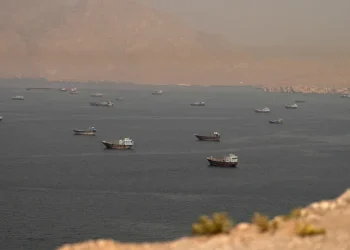
The Middle East remains central to global energy supply. Several major oil producers operate in the Persian Gulf, and a large share of global petroleum exports travels through the Strait of Hormuz.
This narrow maritime passage connects the Persian Gulf to international markets and is one of the world’s most important energy choke points. Roughly one-fifth of the world’s oil supply passes through this corridor each day.
Because of this concentration of energy flows, geopolitical tensions involving Iran or its regional rivals quickly raise concerns about the security of oil shipments. Even when supply disruptions do not occur, the risk of disruption often pushes global oil prices upward.
Oil markets react strongly because demand remains inelastic in the short term. Modern economies depend heavily on petroleum for transportation, agriculture, electricity generation, and industry. As a result, even perceived supply threats can lead to significant price increases.
From Oil Tankers to the Ghanaian Fuel Pump
For Ghana, rising oil prices affect the economy through several channels.
Fuel Prices
Ghana imports a significant portion of the refined petroleum products it consumes. When global crude oil prices rise, the cost of importing petrol and diesel also increases, eventually leading to higher pump prices.
Because fuel is essential for transportation and logistics, these increases affect many sectors simultaneously.
Cost of Living
Higher fuel prices raise the cost of transporting goods across the country. Food transported from farms to urban markets becomes more expensive, contributing to higher food prices and increased household expenses.
Pressure on the Cedi
Petroleum imports are purchased in US dollars. When oil prices rise, Ghana must spend more foreign exchange to import fuel. This increases demand for dollars and can place downward pressure on the Ghanaian Cedi.
Ghana’s Petroleum Pricing Mechanism
The speed with which global oil prices affect domestic fuel prices is linked to Ghana’s petroleum pricing framework overseen by the National Petroleum Authority.
Ghana operates a deregulated petroleum pricing system, meaning pump prices are periodically adjusted to reflect international market conditions.
Several factors determine the final pump price.
The international price of petroleum products forms the base component. When global prices rise, the cost of importing fuel increases.
Exchange rate movements also play a role, since petroleum imports are purchased in US dollars. A weaker Cedi increases import costs.
In addition, taxes and statutory levies contribute significantly to the final price consumers pay.
Finally, distribution and marketing margins cover the costs of transporting, storing, and retailing fuel within Ghana.
Through this framework, global oil price movements quickly reach domestic consumers.
History Shows the Pattern
The link between geopolitical conflict and oil price shocks is well established.
The 1973 Oil Crisis followed the Arab–Israeli war when oil-producing states imposed an embargo on several Western countries. Oil prices quadrupled, triggering inflation and economic disruption worldwide.
The 1990–1991 Gulf War produced similar fears of supply disruption after Iraq invaded Kuwait.
More recently, the Russian Invasion of Ukraine in 2022 again demonstrated how geopolitical conflict can destabilize global energy markets. Rising fuel prices affected economies around the world, including those in Africa.
These examples reveal a consistent pattern: when conflicts threaten major oil supply routes, economic shockwaves spread across the global economy.
Policy Implications for Ghana
The recurring pattern of global oil shocks highlights the need for Ghana to strengthen its economic resilience.
Expanding strategic petroleum reserves could help cushion temporary supply disruptions.
Accelerating investment in renewable energy, such as solar and hydroelectric power, would reduce reliance on imported petroleum.
Improving geopolitical risk monitoring and economic forecasting would help policymakers anticipate external shocks.
Finally, Ghana may work through regional bodies such as the Economic Community of West African States and the African Union to support diplomatic efforts that promote stability in global energy markets.
Conclusion
In an interconnected global economy, geopolitical conflicts rarely remain confined to their immediate geography. Instead, they spread through global commodity markets, particularly energy markets.
For Ghana, the effects often appear first in the form of higher fuel prices, rising transport costs, and inflationary pressure.
Understanding how these shocks travel—from Middle East oil routes to domestic fuel prices—is essential for building economic resilience.
A conflict in the Gulf may seem distant, but its economic impact can quickly arrive at the Ghanaian fuel pump.
Written by: CSP/E. B. Sadongo (Rtd)
Security Analyst | CEO, Pempen Consult
“In an interconnected world, distant conflicts often shape local realities.”
About the Author
CSP/E. B. Sadongo (Rtd) is a retired senior police officer, security consultant, and Chief Executive Officer of Pempen Consult, a Ghana-based security and risk advisory firm. With decades of experience in security management and institutional leadership, he writes on issues at the intersection of security, governance, and economic resilience.
His commentary often examines how global geopolitical developments, particularly those affecting energy markets, shape economic and security outcomes for Ghana and the wider African continent.