The World Bank Group has warned that about 1.2 billion young people are expected to enter labour markets in developing countries over the next decade, heightening concerns about a widening global jobs deficit as many may lack the skills required by employers.
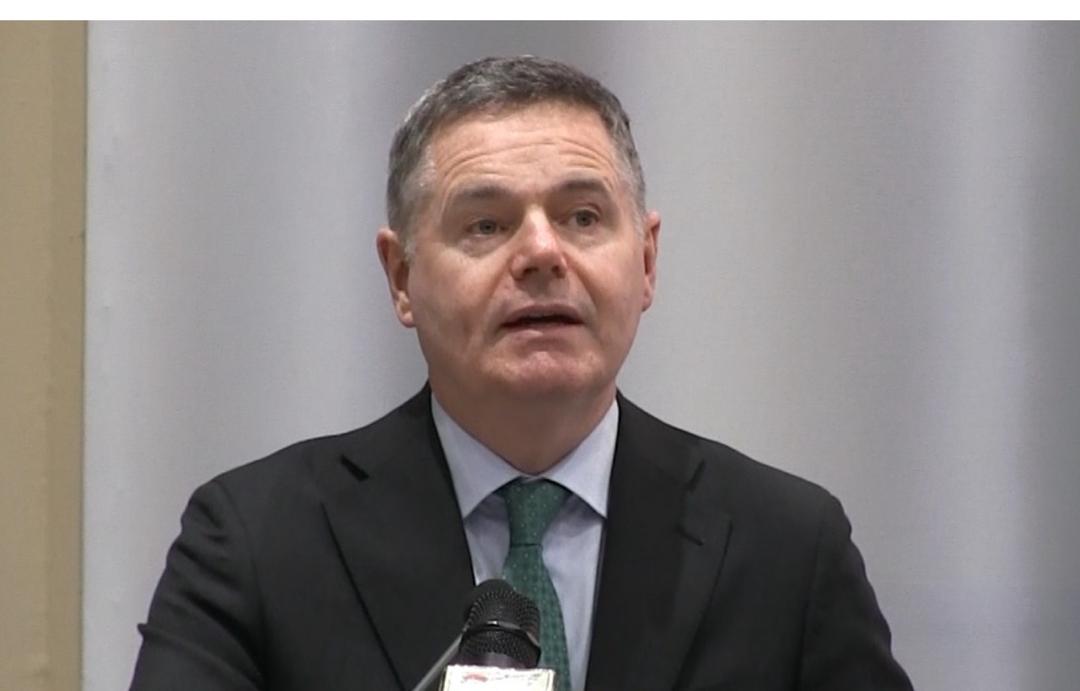
According to the Managing Director and Chief Knowledge Officer of the World Bank Group, Paschal Donohoe, a growing mismatch between education systems and rapidly evolving labour markets risks leaving millions of young people unprepared for the future of work.
Delivering a lecture at the Vice Chancellor’s Occasional Lecture Series at the University of Ghana, he stressed that the challenge facing young people today is not confined to one country but reflects a broader global shift in the nature of work.
“How can young people find their footing in an economy that keeps changing beneath their feet? That question is urgent everywhere,” he said.
Paschal Donohoe noted that structural weaknesses in education systems across developing economies are already widening the gap between learning outcomes and labour market needs.
According to him, seven in ten children under the age of in low- and middle-income countries cannot read a simple age-appropriate text, while more than three billion adults have less than a lower secondary education.
“These are not just numbers, they are lives — a gap between the systems that have been built to educate people and the needs of economies that are changing at a very fast pace,” he stated.
Turning to Africa, the World Bank executive said the continent’s demographic expansion represents both a historic opportunity and a major employment challenge. He explained that Africa currently creates about three million formal jobs annually, even as between 10 and 12 million young people enter the labour force every year.
“The challenge is not simply to get people into jobs. It is to raise productivity and earnings across all types of work so that millions of young Africans who are working are getting ahead,” he said.
He added that the labour market young graduates are entering is becoming increasingly complex as artificial intelligence, automation and the global green transition reshape entire sectors.
“Jobs that exist today will look fundamentally different in ten years’ time. Skills that were sufficient a decade ago will not be sufficient today,” he warned.
He stressed that the World Bank Group is placing education, skills development and job creation at the centre of its development agenda, with a strategy focused on strengthening foundational learning, aligning higher education with labour market needs and supporting entrepreneurship.
“Every individual deserves the education, the skills and the opportunity to access meaningful employment and to realise their full potential,” he said.
In her remarks, the Vice Chancellor of the University of Ghana, Nana Aba Appiah Amfo, underscored the need for academia and industry to deepen collaboration to address some of these challenges.
“The future of work requires a very close relationship between education and industry. Indeed, there is no syllabus that we can create as educators that will solve the skills problem. That why at the University of Ghana, our fourth strategic priority is engagements and partnerships,” she stressed.