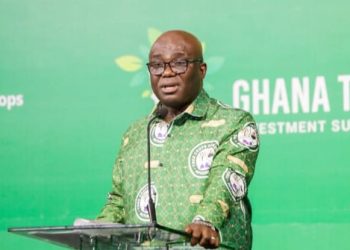
The Member of Parliament for Akwatia, Bernard Bediako, has expressed confidence that President John Dramani Mahama will assent to the Human Sexual Rights and Family Values Bill, 2025, even if fresh legal challenges are mounted against the legislation.
The controversial bill, popularly known as the anti-gay bill, was passed by Parliament on Friday, May 29. It seeks to criminalise LGBTQ activities in Ghana and includes amendments that exempt certain individuals and institutions from sanctions under the law.
Speaking on Channel One TV’s The Big Issue with Umaru Sanda Amadu on Saturday, May 30, Mr Bediako further insisted that the President would not be deterred by any legal action challenging the bill.
“He [President Mahama] will not play games with the people of Ghana. He will not, even if Senior [Manhyia South MP, Nana Agyei Baffour Awuah] decides to go to court. I know that the very day President Mahama receives this, he would assent to this,” he said.
He said the bill’s passage now presents an opportunity for President Mahama to succeed where former President Nana Addo Dankwa Akufo-Addo was unable to.
“For me, we’ve come far. Now it’s a test case for President Mahama. What former President Akufo-Addo could not do, it is expected that President Mahama will do. He has assured us,” he said.
The Akwatia lawmaker explained that the bill would undergo the necessary drafting processes before being transmitted to the President for assent.
“Let me put on record that it is now going to be fine-tuned. That is what happens. I mean, do the proper drafting before it’s presented to the President,” he stated.
Background
In February 2024, Parliament first passed the Human Sexual Rights and Family Values Bill. The legislation was then to be forwarded to former President Nana Addo Dankwa Akufo-Addo for assent.
However, the President did not sign the bill into law immediately. Legal challenges were subsequently filed at the Supreme Court questioning the constitutionality of the bill and the process surrounding its passage.
The legal actions delayed presidential assent.
Some individuals and groups petitioned the Supreme Court, arguing that parts of the bill violated constitutional rights, including freedom of speech, association and equality before the law. There were also arguments over whether Parliament had followed the proper constitutional procedures in passing the bill, particularly concerning financial implications and private members’ bills. The court cases became a major obstacle to the bill becoming law.
In 2025, Parliament reconsidered the legislation and introduced amendments before passing it again on Friday, May 29, 2026.