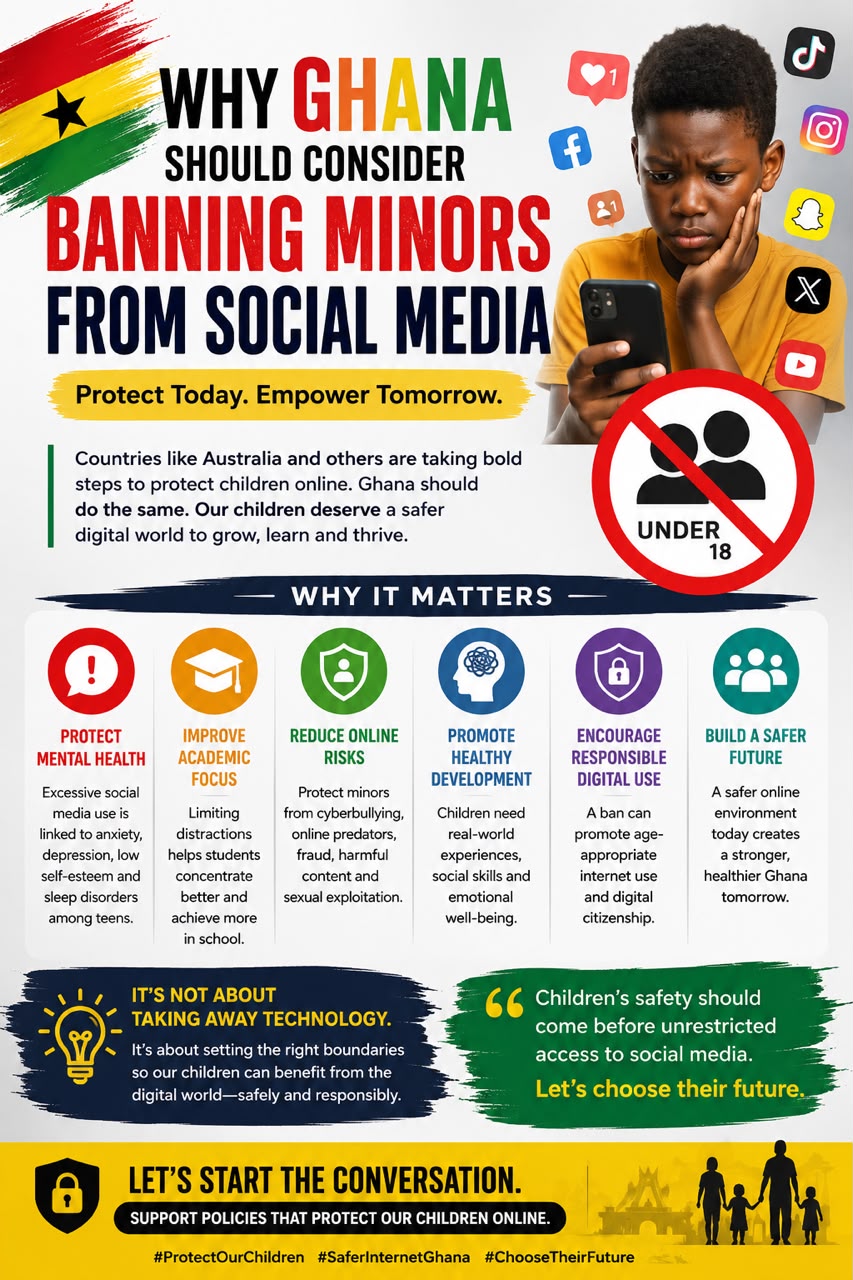
The growing influence of social media on young people has become a major concern worldwide. Countries such as Australia have introduced restrictions aimed at protecting children from the harmful effects of excessive social media use.
Ghana should seriously consider adopting similar measures to safeguard the well-being and future of its young population.
Social media platforms have become a significant part of children’s daily lives. While these platforms offer opportunities for learning, communication, and creativity, they also expose minors to serious risks.
Cyberbullying, online harassment, misinformation, pornography, fraud, and harmful content have become increasingly common. Many young people lack the maturity and critical thinking skills needed to navigate these challenges safely.
Another major concern is the impact of social media on mental health. Studies across the world have linked excessive social media use to anxiety, depression, low self-esteem, and sleep disorders among teenagers.
The pressure to gain likes, followers, and online approval often affects young people’s confidence and emotional well-being. In Ghana, where mental health awareness is still developing, protecting children from these risks should be a national priority.
Social media also contributes to declining academic performance among many students. Instead of focusing on studies, some children spend several hours daily scrolling through videos, engaging in online trends, and participating in unnecessary online arguments. This distraction can affect concentration, productivity, and educational outcomes.
Furthermore, online predators and criminals increasingly target minors through social media platforms. Cases of online scams, sexual exploitation, and identity theft continue to rise globally. Restricting access for minors could help reduce their vulnerability to such dangers.
Critics argue that a ban may limit access to educational resources and digital skills development. However, any restriction should not completely deny children access to the internet. Rather, it should focus on limiting access to certain social media platforms until users reach a responsible age, while encouraging supervised educational use of digital technology.
Ghana can learn from countries that are implementing age-verification systems and stronger online safety regulations. Such measures would compel social media companies to take greater responsibility for protecting young users.
As technology continues to shape modern society, protecting children must remain a top priority. A carefully designed policy restricting minors’ access to social media could help improve mental health, enhance academic performance, reduce exposure to harmful content, and create a safer online environment for Ghana’s future generation.
The question Ghana must answer is simple: Should children’s safety come before unrestricted access to social media? The answer may determine the future of an entire generation.