The Association of Ghana Industries (AGI) has called on the government to introduce targeted tax incentives for businesses, especially under the 24-Hour Economy policy, to help translate recent economic stability into industrial growth, job creation and increased production.
President of the Greater Accra branch of the Association of Ghana Industries (AGI), Tsonam Akpeloo, said while industry welcomed improvements in the macroeconomic environment, the focus of the government’s mid-year budget review should be on measures that would stimulate growth and support local manufacturers.
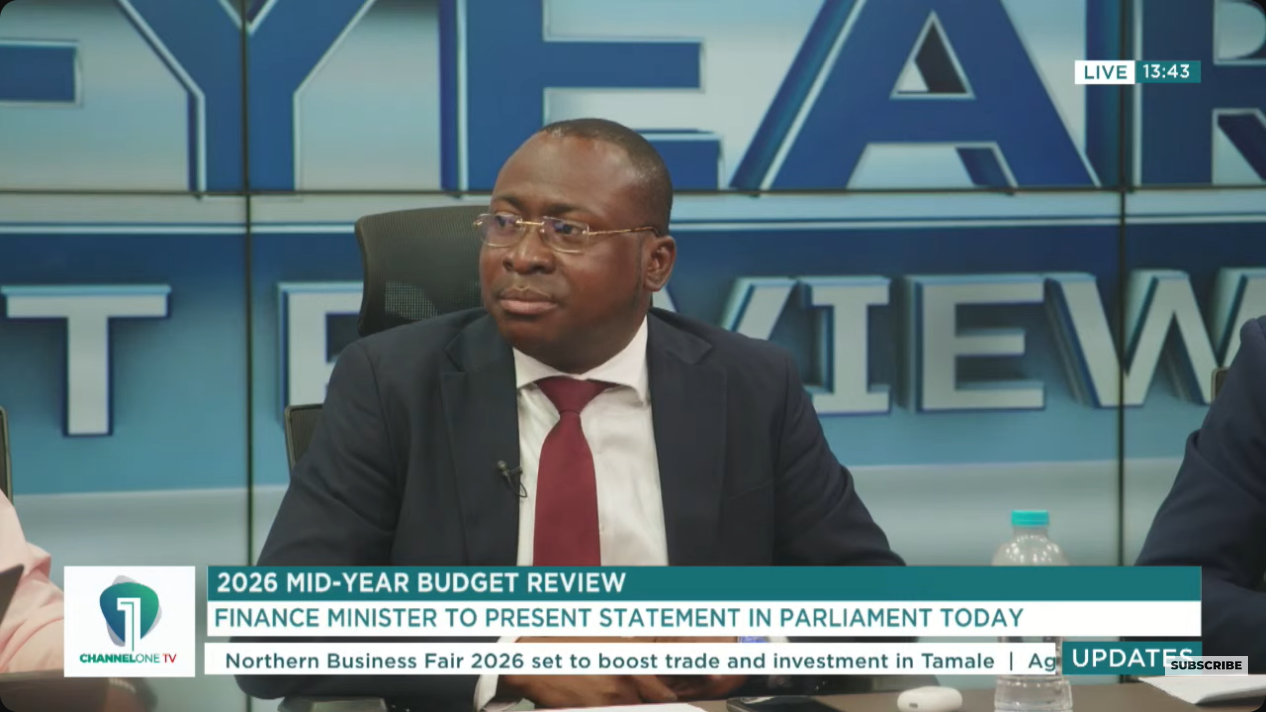
Speaking on Channel One TV on Thursday, July 23, 2026, ahead of the mid-year budget review by the Minister of Finance, Dr Cassiel Ato Forson, Mr Akpeloo said economic stability alone would not be enough to transform the country.
“I’ll begin by commending the government for a more stabilised macroeconomic environment. It’s been impressive, at least for the first half of the year,” he said.
According to him, the next step should be to create policies that enable industry to take advantage of the improved economic conditions and expand production.
“For us, the big issue now is to hear the finance minister talk about measures that will be put in place to translate this stabilised economy into a more growth environment, mainly focusing on transformation measures,” he said.
Mr Akpeloo said government’s flagship 24-hour economy programme would require specific incentives to encourage businesses to operate extended shifts and increase productivity.
“We would like to see how the government, through its flagship programme, for example, like the 24-hour economy, will incentivise industry to take advantage of the more stabilised economy,” he stated.
He warned that Ghana could not afford to remain focused only on stabilisation without implementing policies that drive sustainable growth.
“We know it’s a good time, but imagine that we just stay at having a stabilised economy without seeing growth measures. So that’s really big on our agenda,” he said.
The AGI President called for tax reforms targeting local manufacturers, including reductions in corporate taxes and incentives for companies participating in the 24-hour economy initiative.
He also advocated for a review of some excise duties affecting locally produced goods, particularly beverages, arguing that the current tax structure puts domestic producers at a disadvantage compared with imported products.
“Take excise duty levies, for example. If you take fruit juice, beverages, we have to pay about 20%. That’s really too high,” he said.
Mr Akpeloo said bottled water producers also faced significant tax burdens, noting that such products were not luxury goods and should not attract taxes that undermine local competitiveness.
“We are the only country in the sub-region introducing this type of tax,” he said, urging government to reconsider the policy in the upcoming budget review.
He further called for zero VAT on locally manufactured diapers to enable domestic producers to compete effectively with imported alternatives.
“We’ve got in-store capacity to produce, to supply to the entire West Africa. Why are you not giving industry the incentive to make sure that we maximise our production capacities?” he asked.
Mr Akpeloo said stronger support for local industries was essential because businesses remained critical to job creation and economic transformation.
“Industry is incentivised to create the needed jobs and do the heavy lifting,” he said.