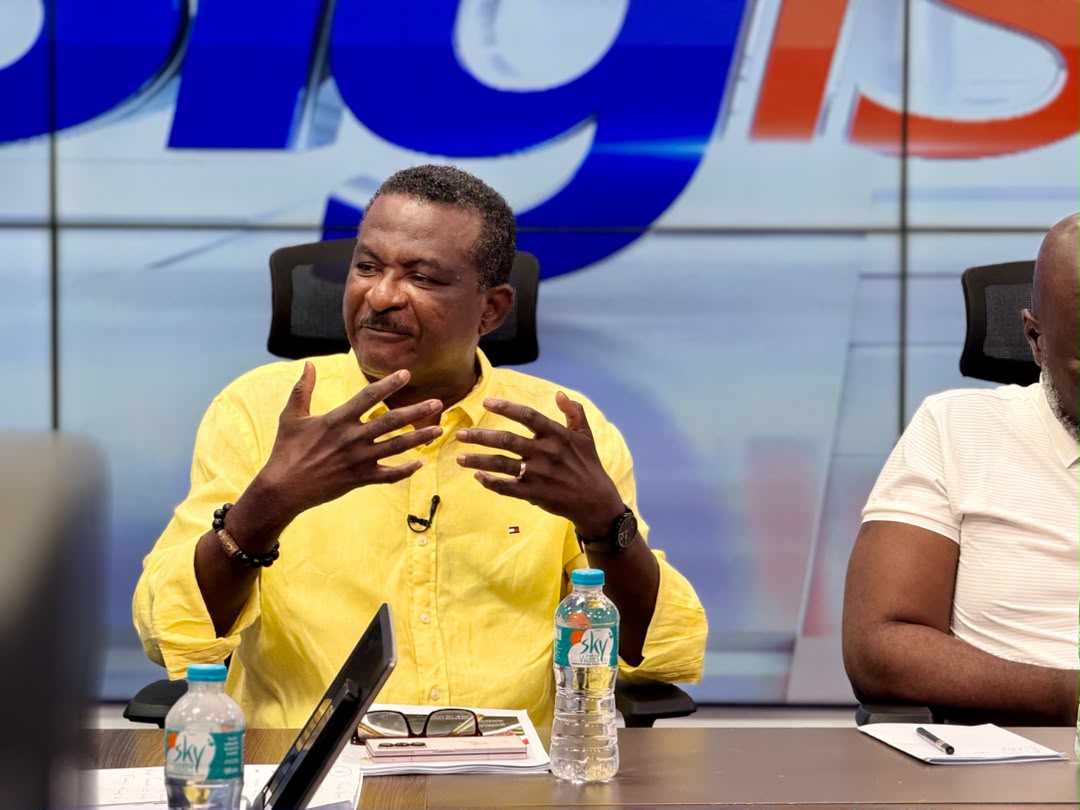
Deputy Majority Leader Kweku Ricketts-Hagan has defended the government’s 24-hour economy policy, describing it as a long-term strategy designed to expand employment opportunities rather than an initiative expected to transform businesses overnight.
Speaking on Channel One TV’s Big Issue on Saturday, July 25, Ricketts-Hagan said the policy is intended to create the conditions that will allow businesses to operate for longer hours over time, stressing that its implementation depends on addressing key infrastructure and operational constraints.
He rejected suggestions that the policy simply requires businesses to remain open around the clock, arguing that such an interpretation ignores the practical realities of demand, energy supply and the incentives needed for firms to sustain round-the-clock operations.
According to him, the 24-hour economy should be viewed as a framework that gradually creates an environment where businesses can expand production and increase employment as market conditions improve.
Ricketts-Hagan explained that many industrial areas currently shut down in the evening because of inadequate infrastructure, including poor lighting and other essential services, making continuous operations difficult.
He said addressing such constraints forms part of the government’s broader implementation plan, with the 24-hour Economy Secretariat expected to roll out incentives to encourage businesses to extend their operating hours.
The Deputy Majority Leader noted that the ultimate objective of the policy is to significantly increase employment by enabling businesses and factories to operate multiple shifts instead of relying on a single workforce.
“The vision is to create an environment where a job previously done by one person can eventually be carried out by three people because businesses have the capacity to operate beyond the traditional working day,” he said.
Ricketts-Hagan urged critics to assess the policy based on its long-term objectives rather than expecting immediate results, insisting that the initiative is a phased programme aimed at laying the foundation for sustained industrial growth and job creation.
![Minister for Foreign Affairs, Samuel Okudzeto Ablakwa, [right] Nigerian High Commissioner-designate of Nigeria to Ghana, Shehu ILU Barde [left]](https://www.citinewsroom.com/wp-content/uploads/2026/07/gh-naija-350x250.jpeg)